A tailored blazer is a must-have for women over 40. It instantly upgrades any outfit, offering a polished look whether you’re heading to the office, running errands, or dressing up for an evening out. This guide breaks down everything you need to know about choosing, styling, and maintaining blazers to ensure they fit perfectly and complement your wardrobe.
Key Takeaways:
- Fit Matters Most: Focus on shoulder seams, bust, waist, sleeve length, and overall length for a sharp look.
- Style Options: Single-breasted for versatility, double-breasted for a structured look, and belted styles for a defined waist.
- Fabric Choices: Wool for year-round wear, linen for summer, and velvet or tweed for winter.
- Color Basics: Start with neutrals like black, navy, or gray, then explore camel, white, or bold patterns.
- Styling Tips: Pair with jeans for casual outings, trousers for work, or dresses for formal events.
- Care Tips: Limit dry cleaning, use wooden hangers, and steam for wrinkle removal.
A blazer isn’t just functional – it boosts confidence and elevates your style. Whether you’re investing $50 or $600, the right fit and care make all the difference.
Styling 20 Blazers in 20 Minutes for Women Over 40
sbb-itb-9502fca
Finding the Right Fit and Silhouette
Blazer Style Comparison Guide for Women Over 40
The secret to making a blazer look polished and expensive often lies in the fit. Even a budget-friendly $50 blazer from Old Navy can shine if it fits your shoulders perfectly, while a $600 designer piece can fall flat if the proportions are off. Understanding the key fit elements is essential for achieving that sharp, tailored look. Let’s dive into the five most important areas to focus on for a blazer that fits like a dream.
5 Fit Points That Matter Most
Shoulder Fit is absolutely crucial – and also the hardest to fix. The shoulder seam should align perfectly with the edge of your natural shoulder, right at the shoulder bone.
Style expert Sally McGraw advises, "The shoulder seam of the blazer should hit right where your own shoulder ends. If it falls closer to your neck, it’s too small. If it juts past the spot where your shoulder starts to slope downward, it’s simply too big".
Getting the shoulders right from the start is non-negotiable because altering this area can be tricky and costly.
Bust Shaping plays a big role in whether your blazer looks tailored or ill-fitted. Each side of the blazer should skim the bust area without pulling, wrinkling, or looking boxy. For those with a larger bust, open-front styles or deep V-neck designs that nip in at the waist are often more flattering than high-buttoning options.
Waist Definition is key to achieving a polished silhouette. The blazer should follow your body’s natural shape without sagging or feeling tight. Tapered waists can highlight curves or create the illusion of them for straighter body types. A quick way to test the fit? Try the "hug test": cross your arms in a gentle hug while wearing the blazer. If the fabric pulls too much across the back or shoulders, it’s likely too small.
Sleeve Length can make or break the overall look. For full-length sleeves, they should end between your wrist joint and the first thumb joint when your arms are relaxed at your sides. Three-quarter sleeves are another versatile option, offering a more relaxed, seasonless style.
Overall Length has a big impact on how the blazer complements your outfit. A classic blazer length, ending at the hipbone, tends to flatter most body types. Be cautious with lengths that hit at the widest part of your hips, as this can create an unflattering horizontal line.
Once you’ve nailed the fit, it’s time to consider which style best suits your silhouette and wardrobe.
3 Blazer Styles for Women Over 40
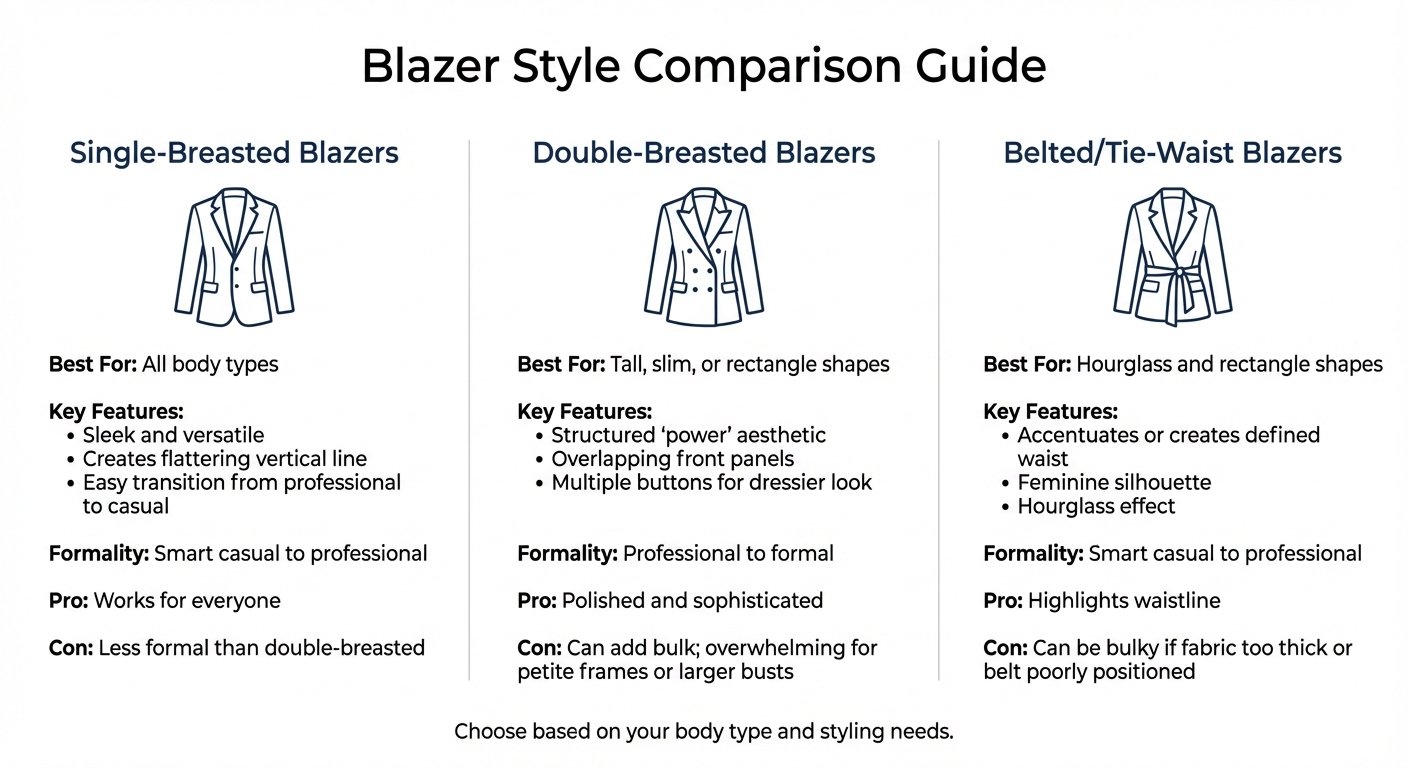
Single-Breasted Blazers are a wardrobe powerhouse. With one or two buttons and a clean, streamlined front, they create a slimming vertical line that works for all body types. These blazers easily transition from professional settings to casual outings. For a modern vibe, go for a one-button blazer where the button sits just below the bust but above the belly button. Compared to double-breasted styles, they offer a slightly less formal feel.
Double-Breasted Blazers bring a structured, sophisticated "power" aesthetic that’s currently trending. They’re particularly flattering on taller, slimmer, or rectangle-shaped figures. The overlapping front panels and multiple buttons create a dressier look, perfect for important meetings or evening occasions. However, this style can add bulk, so it may overwhelm petite frames or those with larger busts.
Belted or Tie-Waist Blazers work wonders for hourglass and rectangle shapes. They highlight or create the appearance of a defined waist.
Andrea Lenczner, co-designer of Smythe, notes, "A great tailor who can tweak a waist and bust and adjust a sleeve length will take a blazer to the next level and make it look like it was made for you".
To avoid adding unnecessary volume, steer clear of thick fabrics or poorly positioned belts.
Blazer Style Comparison
| Blazer Style | Best For | Advantages | Disadvantages |
|---|---|---|---|
| Single-Breasted | All body types | Sleek, versatile, and creates a flattering vertical line | Less formal compared to double-breasted options |
| Double-Breasted | Tall, slim, or rectangle shapes | Polished and structured for a "power" look | Can add bulk; overwhelming for petite or larger busts |
| Belted / Tie-Waist | Hourglass and rectangle shapes | Accentuates or creates a defined waist | Bulky if fabric is too thick or belt placement is off |
Choosing Fabrics, Colors, and Details
Once you’ve nailed the fit, it’s time to focus on fabrics, colors, and design details that bring together both comfort and style with personalized fashion curation. The right choices can make your blazer versatile enough for everything from summer meetings to cozy winter evenings.
Best Fabrics for Different Seasons
Wool is a go-to fabric for all seasons. For durability and structure, Super 100s–130s are excellent, while mid-weight "seasonless" weaves strike a balance between breathability and insulation. If you’re looking for something softer, Super 150s are luxurious but more delicate – better saved for special occasions. For warmer climates or transitional weather, hopsack, a loosely woven wool, offers breathability without compromising on style.
"IME, the weave is also more important than the weight when it comes to how ‘warm’ a fabric feels. A tightly woven gab in 10oz will feel warmer than a very open weave tropical wool in 12oz", says dieworkwear, a menswear expert on Styleforum.
Linen shines in summer thanks to its lightweight, breathable nature and ability to wick moisture. Yes, it wrinkles easily, but that relaxed, slightly crumpled texture is part of its charm. Opting for unlined or half-lined linen blazers enhances airflow, keeping you cool. Cotton, on the other hand, is a solid pick for spring and fall. It’s durable, breathable, and often blended with stretch fibers for a snug yet comfortable fit.
For travel or long days, ponte or jersey fabrics – commonly found in "sweater blazers" – are a lifesaver. They’re soft, resist wrinkles, and pack easily. When the chill sets in, tweed offers warmth, texture, and a timeless appeal. For festive occasions or winter evenings, velvet adds a touch of luxury with its soft texture and rich finish.
Once you’ve chosen the fabric, it’s time to think about color and patterns to complete your look.
Colors and Patterns That Work
Start with the basics: black, navy, gray, and white. These core neutrals are incredibly versatile. Black is ideal for professional settings, while navy and gray are perfect for smart-casual occasions.
"Core colors are those classic neutrals that go with everything: black, navy blue, white, and gray", says Cassandra Sethi.
Camel is a great way to add warmth and sophistication to a black outfit, especially for workwear. For a more relaxed vibe, olive and other earthy tones pair beautifully with denim. A white or cream blazer is a bright, fresh option for spring and summer wardrobes.
Looking to add personality? Accent colors like fuchsia, jewel tones, or spring green can make a statement when paired with neutral bottoms. For patterns, plaid and pinstripe are timeless choices for a polished, professional look. Herringbone can subtly elevate neutral outfits, especially in lighter fabrics like linen during warmer months. If you’re feeling bold, leopard print adds a modern edge when paired with olive or neutral tones. For fall, houndstooth and tweed bring texture and a scholarly vibe.
With fabrics and colors sorted, it’s time to fine-tune your blazer with the right design details.
Design Details to Consider
The details make all the difference when it comes to creating a polished, tailored look.
Lapels set the tone: notched lapels are classic and versatile for everyday wear, peak lapels add a formal, structured touch, and shawl collars are perfect for evening or dressier occasions. If you’re petite, smaller lapels can help maintain balance, while larger lapels can add width to the upper body.
Button stance – or where the buttons are placed – affects both style and fit. A higher stance typically features more buttons (like three), while a lower stance might have just one. Women with larger busts often find a two- or three-button configuration more flattering.
Shoulder structure is another key detail. Light padding provides a polished silhouette without looking stiff and helps the blazer hold its shape over time. Modern designs often include options like asymmetrical closures, side ties, or zip fronts for a contemporary twist. For a more feminine look, belted blazers or side-tie styles create an hourglass effect, especially flattering for rectangle or hourglass body shapes.
Fabric Comparison by Season and Price
| Fabric Type | Best Season | Formality Level | Care Requirements | Price Range (USD) |
|---|---|---|---|---|
| Wool (Super 120s) | Year-round | High (Professional) | Dry Clean Only | $250 – $600 |
| Linen | Summer | Casual to Semi-Formal | Dry Clean or Hand Wash | $100 – $400 |
| Cotton Stretch | Spring/Fall | Smart Casual | Machine Washable/Dry Clean | $50 – $250 |
| Ponte/Jersey | Transitional | Casual/Travel | Machine Washable | $40 – $200 |
| Tweed | Winter | Semi-Formal/Heritage | Dry Clean Only | $150 – $500 |
| Velvet | Winter/Evening | High (Formal) | Dry Clean Only | $100 – $650 |
How to Style Your Blazer for Any Occasion
A blazer is more than just a wardrobe staple – it’s a true style chameleon. Whether you’re heading to the office, meeting friends on the weekend, or dressing up for a special evening, a well-chosen blazer can tie your entire look together with ease.
Blazer Outfit Combinations
For women over 40, a blazer is the ultimate outfit enhancer. If you’re dressing for work, try pairing an oversized blazer with tailored trousers and kitten heels or loafers for a polished yet comfortable vibe. A camel blazer worn over a sleek black base – like a black sweater and trousers – finished with leopard-print pumps is a timeless office go-to. For a more relaxed workspace, throw on a knit blazer over a cashmere hoodie for that perfect mix of cozy and chic.
Blazers also shine in casual settings. Toss one over a classic tee and straight-leg jeans for a laid-back yet pulled-together weekend look. Want to add a modern edge? Layer your blazer over a graphic tee and pair it with baggy denim for an effortlessly cool off-duty outfit.
When it’s time to dress up, your blazer can still take center stage. For formal events, drape a sleek blazer over a floor-length gown for an unexpected layer of sophistication. On date night, style your blazer with tailored slacks or a printed midi dress and heels. For something a bit more daring, pair it with a silk camisole or slip dress, statement heels, and a box clutch for an elegant evening ensemble.
"A blazer is more than just an item of clothing; it can serve as a confidence builder, and a symbol of personal style and professionalism all at once."
- Christie Smythe, Co-designer, Smythe
With these combinations, your blazer can effortlessly transition from boardroom meetings to weekend brunches and beyond.
Shoes and Accessories to Complete the Look
The right shoes and accessories can elevate your blazer styling even further. For casual outings, sneakers, loafers, or Chelsea boots work beautifully, especially when paired with a crossbody bag and simple gold hoops. For work, kitten heels, loafers, or leopard-print mules add a polished touch. When dressing for an evening out, strappy sandals, pumps, or slingbacks paired with a box clutch and bold statement earrings bring the perfect amount of glamour.
Accessories are also a great way to make your blazer feel uniquely yours. Add a belt – whether leather, chain, or rope – over an oversized or slouchy blazer to define your waist and create a more feminine silhouette. Push up your sleeves to show off bracelets or watches, and consider finishing the look with gold accents like chunky hoop earrings, layered coin necklaces, or bangles. These small details can completely transform a neutral blazer into a standout piece.
"Accessories enable you to personalize a perfectly tailored blazer to express your individuality, modernize the complete look and make it appropriate for various occasions."
- Andrea Lenczner, Co-designer, Smythe
Common Styling Mistakes to Avoid
Even the most stylish blazer can fall flat if not styled thoughtfully. A key rule is to balance proportions. Oversized or "boyfriend" blazers should be paired with slim-fit bottoms – like skinny jeans, leggings, or tailored trousers – to avoid a boxy effect. On the other hand, cropped blazers look best with high-waisted pants or skirts, which create a flattering, elongated silhouette.
Pay attention to fit – shoulder seams should align with your natural shoulders to prevent a bunched or ill-fitting look. Even if you plan to wear your blazer open, make sure it buttons smoothly without pulling across the chest or waist.
Finally, don’t overlook the power of defining your waist. Adding a belt to an open-front or oversized blazer instantly creates an hourglass shape and ensures the blazer doesn’t overwhelm your frame. This simple trick keeps the look modern and flattering, no matter the occasion.
Shopping Tips and Care Instructions
Once you’ve nailed the perfect fit and style, it’s time to focus on shopping smart and keeping your blazer in top-notch condition. Here’s how to make sure your blazer always looks sharp and lasts for years.
How to Shop for Quality Blazers
Getting the right shoulder fit is crucial when buying a blazer. The shoulder seam should align with your natural shoulder, and you should test the fit by raising your arms or giving yourself a hug. If the shoulders fit perfectly, you’ll save yourself from expensive alterations. As Erin Busbee, Founder of Busbee Style, says:
"Shoulder alterations can be really expensive so find a blazer that fits perfectly in the shoulders, and then deal with alterations in other areas."
When it comes to sleeve length, aim for the hem to land between your wrist bone and the first thumb joint. Look for princess seams – those curved seams along the back that create a flattering, tailored waistline. A one-button blazer is always a timeless choice, with the button sitting below the bust and above the belly button to highlight your shape.
For affordable options, check out H&M ($40–$50), Mango, and Quince. Mid-range brands like J. Crew (around $150–$300) and Banana Republic offer excellent value, while high-end designers such as Veronica Beard (starting at $450) and Smythe (around $600) provide exceptional craftsmanship and durability. Even a budget-friendly blazer can look polished with professional tailoring. Consider adding waist suppression (darts at the side seams) and tapered sleeves for a sleek look. As Natalie Dixon, Editor-in-Chief of Chic Style Collective, puts it:
"True luxury is about fit. Walk into Claridge’s in a badly fitted jacket, and it doesn’t matter if it’s designer – you’ll look undone."
Once you’ve found the perfect blazer, taking proper care of it will ensure it remains a wardrobe staple for years to come.
Maintaining Your Blazers
To keep your blazer in great shape, avoid over-dry-cleaning it. Too many trips to the cleaners can weaken natural fibers, so limit professional cleaning to two or three times a year. After each wear, brush off any dust and hang the blazer in a well-ventilated space for at least 24 hours to let it air out and release odors.
Use broad-shouldered wooden hangers to support the blazer’s structure, as wire or plastic hangers can distort its shape. Store it in a breathable garment bag to protect it from dust and moths, but avoid plastic covers, which can trap moisture and lead to mildew. Cedar blocks or sachets in your closet can naturally repel moths and absorb excess humidity. For wrinkles, a garment steamer is a gentler option than ironing, especially for delicate fabrics like wool.
For small stains, act quickly by blotting the area with a clean cloth and mild detergent. Avoid scrubbing, as this can spread the stain. Also, remember to unbutton your blazer when sitting down to prevent strain on the fabric or buttons. As The Tailory NYC advises:
"Smart care isn’t just about prolonging fabric life, it’s about honoring the investment you’ve made in clothing that affirms you."
Care Requirements by Fabric Type
| Fabric Type | Cleaning Method | Maintenance Level | Estimated Cleaning Cost |
|---|---|---|---|
| Wool | Dry Clean Only | High (Requires steaming/brushing) | $15–$25 |
| Linen | Dry Clean or Hand Wash | High (Prone to heavy wrinkling) | $10–$20 |
| Cotton | Machine Wash (Delicate) or Dry Clean | Medium (Wrinkles easily) | $10–$15 |
| Velvet | Professional Dry Clean Only | Very High (Pile can be crushed) | $20–$30 |
| Cashmere | Professional Dry Clean | High (Delicate fibers) | $20–$35 |
Each fabric type needs specific care to stay in top condition. For wool and cashmere, limit dry cleaning and focus on brushing, airing out, and using cedar to protect against moths. Linen often requires hand washing or professional cleaning, and it naturally wrinkles, so a steamer can help keep it fresh. Cotton is more forgiving and can usually handle a gentle machine wash, but always air dry to prevent shrinkage. For delicate fabrics like velvet and silk, professional dry cleaning is the safest route to maintain their texture and quality.
Taking these steps will ensure your blazer stays as polished and professional as the day you bought it.
Conclusion
A well-fitted blazer can completely elevate your style, making it a key piece in any wardrobe. This guide has outlined how to choose and tailor your blazer to perfection. Whether you spend $50 or $650, the secret lies in achieving the right fit. As Beth Djalali, CEO of Style at a Certain Age, puts it:
"A blazer doesn’t just finish an outfit – it gives you confidence. Choose the cut and fabric that make you feel polished and powerful, and you’ll find yourself reaching for it again and again."
To start, consider investing in a classic single-breasted blazer in versatile colors like black, navy, or gray. Once you’ve mastered the basics, you can branch out into bolder colors or patterns that showcase your personality. Pay particular attention to the fit of the shoulders, as this is the foundation of a sharp look. From there, a skilled tailor can adjust the waist, sleeves, and length to give even an affordable blazer a high-end, custom feel.
For more inspiration and expert advice, check out Angela Howenstein’s website. It’s packed with styling tips for women over 40, practical shopping guides, and ideas for organizing and updating your wardrobe to suit your lifestyle.
Pick a blazer that reflects your personal style, have it tailored to perfection, and you’ll have a timeless piece that effortlessly transitions from the office to casual weekends, date nights, and beyond.
FAQs
How do I choose the best blazer style for my body type?
Choosing the right blazer starts with understanding your body shape and finding a cut that complements it. Start by taking note of your proportions – bust, waist, hips, and shoulders – and keep these tips in mind:
- Larger bust: Go for open-front or deep-neckline blazers that cinch at the waist. These styles accentuate your curves while staying comfortable.
- Smaller chest: Blazers with broader lapels can add visual balance and create a more proportionate look.
- Petite frames: Slim-fit blazers that hit at the hip or higher help elongate your legs and maintain a sleek silhouette.
- Pear-shaped bodies: Choose blazers with structured shoulders to add volume on top and balance out fuller hips.
- Apple shapes: Single-breasted styles with longer hemlines draw attention downward and flatter the legs.
When it comes to fit, the details matter. Make sure the shoulder seams align perfectly with your shoulders, and the sleeves should end right at your wrists. A blazer should feel snug but never restrictive. Even if you’re buying off-the-rack, small adjustments – like shortening the sleeves or nipping in the sides – can make a huge difference, giving the piece a more tailored, polished look.
For women over 40, Angela Howenstein’s website is a great resource. It features outfit inspiration and budget-friendly blazer options that blend style with comfort.
How can I take care of my blazer to make it last longer?
To keep your blazer in top shape for years, start by hanging it on a sturdy, contoured hanger after each wear. This helps maintain its structure and prevents creases. If you notice light wrinkles, don’t worry – these often smooth out on their own overnight. For any surface dirt, a soft brush does the trick.
When it’s time to clean, always check the care label first. Many cotton or polyester blazers can be hand-washed or put through a delicate cycle with cold water, then air-dried. However, for wool, leather, or other delicate fabrics, it’s best to leave the cleaning to the professionals to avoid any damage.
If you’re storing your blazer for an extended period, opt for a breathable garment bag and keep it in a cool, dry spot away from direct sunlight. For quick touch-ups, a handheld steamer is a great option – it smooths wrinkles without the risk of high heat damage. By following these tips, your blazer will stay sharp and ready to wear whenever you need it.
What are the best colors and patterns for versatile blazers?
For a wardrobe that stands the test of time, start with neutral shades like black, navy, gray, and white. These colors effortlessly complement everything from casual jeans to elegant dresses and stay stylish no matter the season. A black blazer, in particular, is a standout piece – ideal for both professional settings and laid-back outings.
To add a touch of texture or visual flair, consider incorporating classic patterns such as houndstooth, plaid, or herringbone. These timeless prints strike the perfect balance between polished and subtle, making them easy to mix and match for any occasion. They’re especially great for women over 40 who want a wardrobe that feels both sophisticated and versatile.