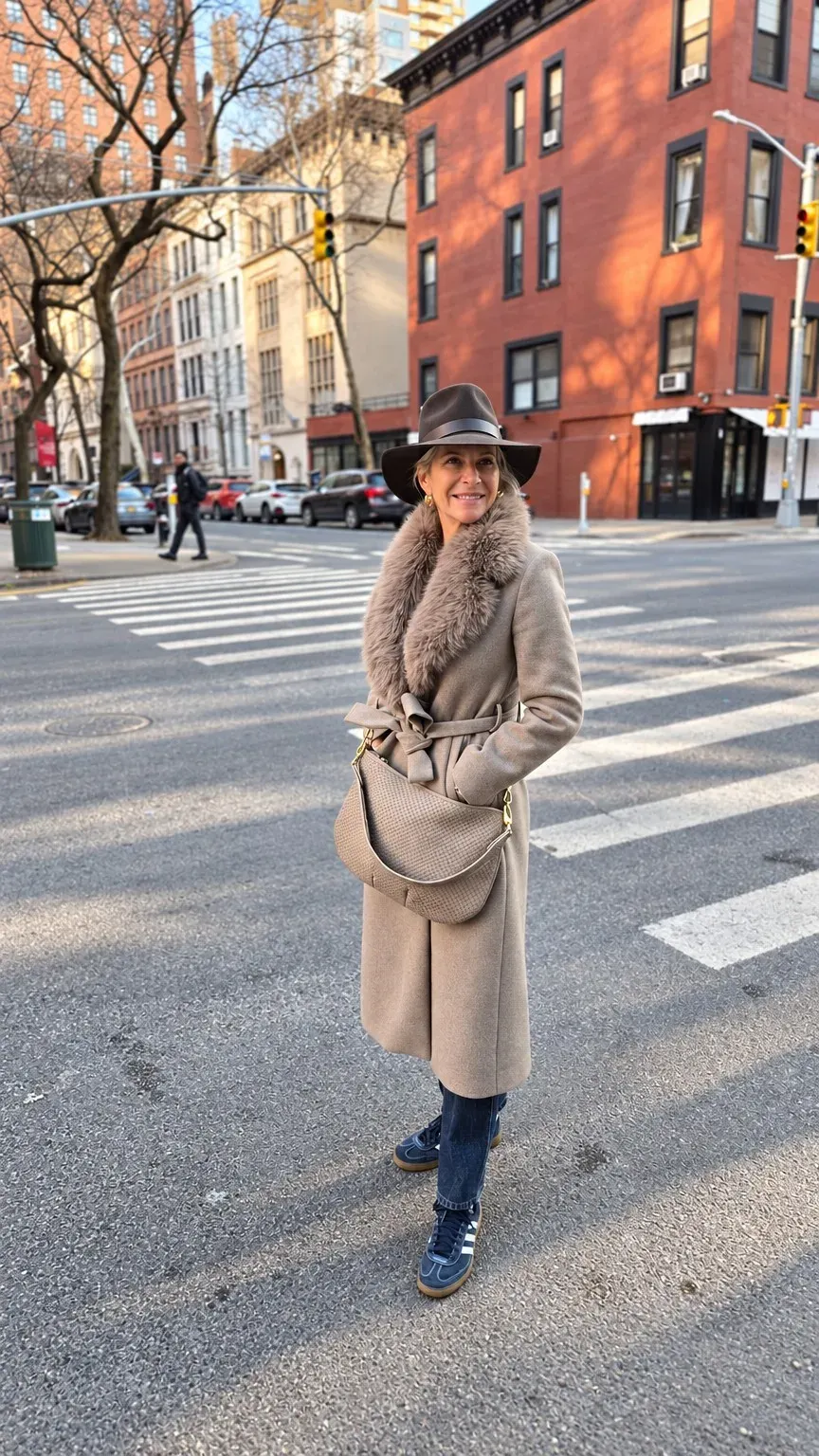
When you hit 40, your style needs often change. The goal? Balance comfort and style without feeling outdated or overly trendy. This guide simplifies wardrobe building for year-round dressing, focusing on practical layering, fabric choices, and timeless pieces while keeping your budget in check. Here’s what you’ll learn:
- Key wardrobe essentials: High-rise jeans, tailored trousers, versatile blazers, and classic dresses.
- Smart layering tips: Use the 3-layer rule for warmth without bulk and the "Third Piece Rule" for polish.
- Seasonal dressing: From breathable summer fabrics like linen to cozy winter layers like cashmere.
- Capsule wardrobe basics: Fewer than 50 versatile pieces, with a neutral color palette and seasonal accents.
- Comfort meets fit: Tailoring and fabric selection ensure clothes that move with you and feel great.
Whether it’s spring’s unpredictability, summer heat, or winter’s chill, this guide helps you stay stylish and comfortable without overhauling your entire closet.
The Over 40 Capsule Wardrobe That Makes You Look EXPENSIVE (without even trying!)
sbb-itb-9502fca
Building a Comfort-First Wardrobe
A comfort-first wardrobe is all about choosing pieces you’ll reach for time and time again – clothes that feel as good as they look, taking you seamlessly from morning meetings to evening plans. As Karen Kane explains, "Comfort doesn’t mean spending every day in yoga pants and a hoodie… Dressing in your 40s comfortably means wearing outfits that make you feel good about yourself, without self-consciously distracting you from a full day of activities".
Must-Have Wardrobe Pieces
Start with versatile basics that work across seasons and occasions. Think high-quality plain white and black T-shirts ($20–$80), crisp white button-downs in cotton or silky fabrics, and long-sleeve tees for layering. For bottoms, invest in high-rise straight-leg jeans with stretch ($108–$260) and tailored black trousers made from all-season fabrics like tropical wool (around $170). Tailored leggings can also deliver comfort with a polished appearance.
Layering pieces are your wardrobe’s MVPs. Blazers, cardigans, and trench coats not only help regulate body temperature but also add instant sophistication to any outfit. Fashion stylist Corina Gaffey highlights the versatility of a trench coat, saying, "A trench is a wardrobe hero, working with brights or neutrals, and so is a leather jacket to add some toughness to t-shirts or dresses". For dresses, keep a few classics like a Little Black Dress, knit maxi dresses, and wrap dresses in your closet. These styles are easy to move in and can be dressed up or down effortlessly. And don’t forget the "Third Piece Rule": add a blazer, cardigan, vest, or statement scarf to basic outfits for that extra touch of polish.
When it comes to footwear, strike a balance between practicality and style. Lifestyle sneakers, penny loafers, ballet flats, and kitten heels are all great options. Kitten heels, in particular, offer a bit of height without the discomfort of traditional high heels. A pro tip: shop for shoes in the evening when your feet are naturally more swollen to ensure they’ll be comfortable all day long.
Once you’ve nailed down your essentials, the next step is choosing fabrics that keep you comfortable and looking sharp year-round.
Selecting Comfortable Fabrics
Opt for breathable natural fibers like cotton, linen, and Tencel™ Lyocell, which help regulate body temperature and allow for airflow. Merino wool is another standout – it’s moisture-wicking, odor-resistant, and versatile enough for both cold-weather layers and lightweight summer wear. You can even snag it for under $50 at retailers like Quince. For structured pieces like trousers or blazers, look for all-season fabrics such as tropical wool or viscose blends.
Silk and lightweight cashmere are also wardrobe staples. They offer breathability in the summer and insulation in the winter. Ellie Thoren, Senior Director at EILEEN FISHER, shares, "I love cashmere at the beach… It’s soft, lofty and doesn’t have the itch factor". Be cautious with 100% acrylic fabrics – they’re less breathable and prone to pilling. Instead, go for synthetic blends that include natural fibers for better stretch and durability.
Check fabric tags carefully before you buy. Blends like Tencel™ + cotton or recycled polyester + wool combine durability and breathability. For stretch denim, aim for no more than 2% Lycra – it’ll hug your curves while holding its shape. When layering, start with thin, form-fitting base layers like silk camisoles or lightweight merino wool, and then add heavier fabrics such as chunky knits or wool coats as needed.
While fabric choice sets the stage, achieving the right fit is what truly elevates your comfort-first wardrobe.
Getting the Right Fit
Tailoring is key to creating a wardrobe that flatters your body. Celebrity stylist Ariel Tunnell reminds us, "Being comfortable and feeling good in your clothes is more important than the number on the label". Don’t hesitate to size up if it means a better fit – comfort always trumps the size on the tag.
When layering, avoid having all your layers end at the same spot on your body, and stick to just one bulky piece while keeping the rest lightweight. A well-fitting bra and shapewear can also make a big difference, ensuring your clothes lay smoothly. Bodysuits are another great option for eliminating wrinkles and fabric bunching under fitted pants or skirts.
Test how your clothes move by reaching, bending, or turning to ensure they don’t restrict you. Slim-fit styles are a great choice for a tailored look that isn’t too tight, while funnel neck tops offer a comfortable alternative to constrictive turtlenecks. The goal is to find pieces that follow your shape without limiting your movement or comfort.
Dressing for Each Season
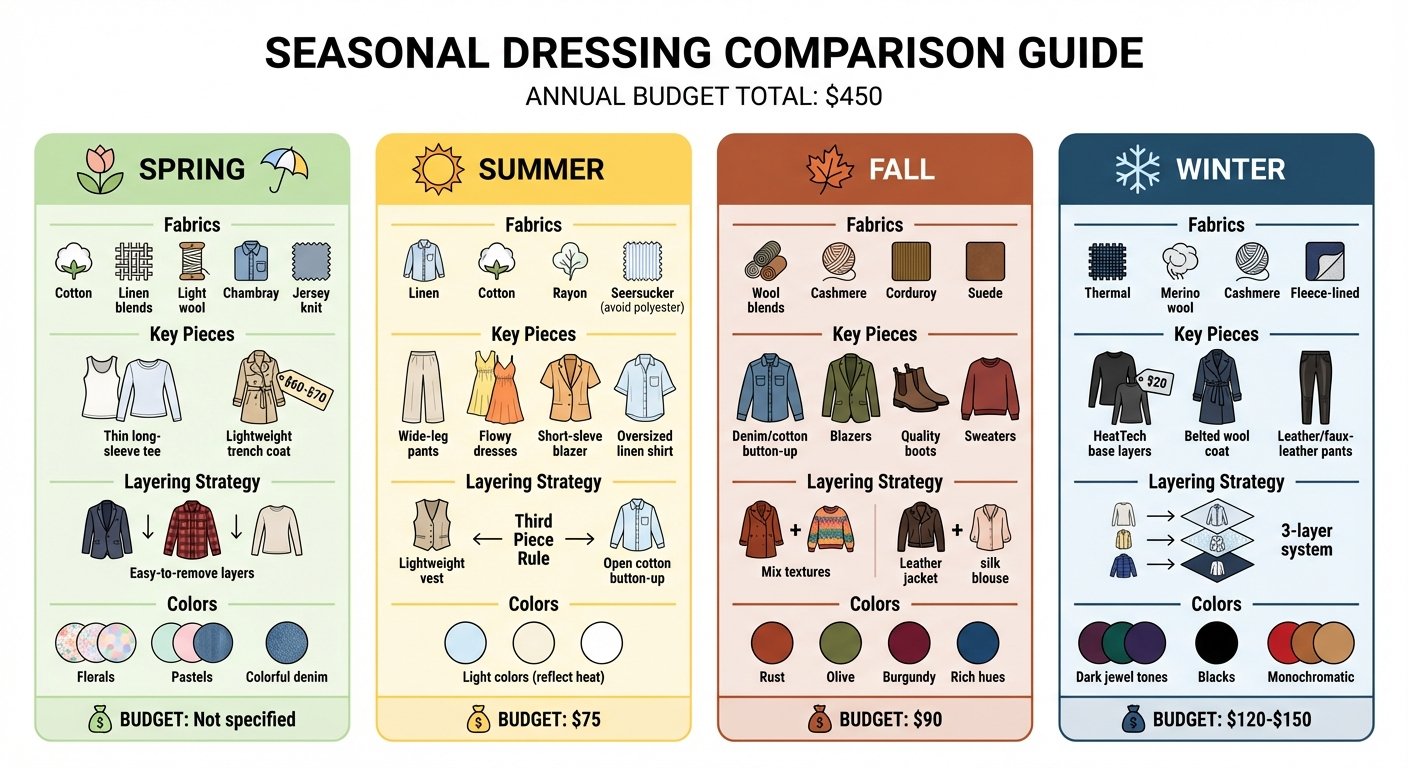
Seasonal Comfort Dressing Guide: Fabrics, Layers & Budget by Season
Your comfort-first wardrobe can easily adapt to the changing seasons. By making a few thoughtful adjustments, you can stay stylish and comfortable, no matter the weather.
Spring: Lightweight Layers and Bright Colors
Spring calls for flexibility and breathable fabrics. Think cotton, linen blends, light wool, chambray, or jersey knit – materials that transition seamlessly between cool mornings and warmer afternoons. Opt for layers that are easy to remove, like blazers or flannel shirts, so you can adjust to fluctuating temperatures without compromising your look. Pair a tank top with a thin long-sleeve tee for a practical yet stylish combo. And don’t forget a lightweight weatherproof jacket or trench coat (priced around $60–$70) to stay dry during spring showers.
Spring is also the perfect time to brighten up your wardrobe. After months of winter neutrals, freshen things up with florals, pastels, or colorful denim. Keep your base layers neutral so you can easily mix in these seasonal accents without overhauling your closet. As temperatures rise, you’ll be ready to pivot toward summer’s lighter, breezier styles.
Summer: Breathable Fabrics and Loose Fits
When summer heat kicks in, prioritize fabrics that allow your skin to breathe. Linen, cotton, rayon, and seersucker are your go-to choices, while synthetic blends like polyester are best avoided since they trap heat.
Comfortable, loose-fitting clothing is key. Wide-leg linen pants or palazzo trousers let air circulate, keeping you cool and comfortable. Flowy dresses and skirts offer the same breezy effect while adding a touch of effortless elegance. Stick to light colors – they reflect heat and can help you feel several degrees cooler.
To keep your summer outfits polished, try the "Third Piece Rule" by adding a lightweight vest or an open cotton button-up over a tank top. Short-sleeve blazers or oversized linen shirts can also provide stylish sun protection without making you overheat. And if you’re not a fan of sleeveless tops, don’t worry – there are plenty of breathable options that offer more coverage while keeping you comfortable.
Fall: Mixing Textures and Adding Warmth
As autumn rolls in, it’s time to embrace richer textures and cozier fabrics like wool blends, cashmere, corduroy, and suede. Fall is also the perfect season to experiment with mixing textures. For instance, pair a suede coat with colorful knitwear or layer a leather jacket over a silk blouse for added depth and interest.
"Layers can add dimension, texture, and warmth, and the right materials combined together can effortlessly add to your style." – Lindsey Bernay, Fashion Expert and Author
Start with a warm base layer, such as a denim or cotton button-up shirt, to lock in heat. Layer short-sleeved shirts over long-sleeve tees for a look that’s both functional and stylish. Blazers become a fall staple, offering just the right amount of warmth while elevating your outfit.
Budget around $90 for fall essentials like quality boots and sweaters. Pair rugged denim with structured tweed for a versatile combination that’s practical and polished. This season is all about balancing comfort with style.
Winter: Staying Warm Without Extra Bulk
Winter dressing is all about smart layering to stay warm without adding unnecessary bulk. Use a three-layer system: a thin base layer (like cotton or thermal), a middle layer for insulation (such as a knit sweater), and a protective outer layer (like a coat). This method keeps you warmer and more comfortable than piling on heavy sweaters.
Thermal base layers, such as HeatTech (around $20), and fleece-lined tights are great for staying warm without feeling weighed down. Layer cashmere or merino wool sweaters over your base layers, and opt for belted wool coats or tailored blazers to keep your silhouette sleek. Leather or faux-leather pants are another smart choice – they’re naturally warmer and more wind-resistant than denim, making them ideal for winter’s chill.
Winter typically requires a larger portion of your wardrobe budget – around $120 – since quality coats and heavy materials are key investments.
"The single most important rule of layering is not in each individual piece, it’s in the way they fit together as a whole, cohesive look." – Kelsey Stiegman, Fashion Editor
Monochromatic outfits, like all-red or all-camel ensembles, create a chic, cohesive appearance that works well with multiple layers. Dark jewel tones and blacks not only look sophisticated but also absorb heat, helping you stay warm during the coldest months. With this thoughtful approach, you can navigate winter in style and comfort.
Smart Casual: A Year-Round Approach
Personalized smart casual curation strikes the perfect balance for women over 40 – it’s polished yet comfortable, offering a stylish look without rigid rules. This approach blends professional, structured pieces with relaxed, easygoing items, giving you more freedom to express your personality than traditional business attire allows.
"The key is to mix formal with casual for a polished, individual look." – Sylvia, Founder of 40+style
By combining form with function, smart casual builds on your comfort-first wardrobe, helping you achieve a refined yet relaxed aesthetic. It’s a style that works effortlessly throughout the year, ensuring you look and feel great no matter the season.
Smart Casual Basics
Let’s break down the essentials of smart casual dressing, which seamlessly combines style and comfort for an evolving wardrobe. For tops, think silk blouses, crisp white button-down shirts, high-quality T-shirts in neutral tones like black or white, and turtlenecks for layering. When it comes to bottoms, consider dark-wash bootcut or straight-leg jeans, tailored trousers in fabrics like wool or viscose, pencil skirts, or midi skirts. Add structured layers such as blazers or tailored jackets, and finish the look with loafers, ballet flats, smart sneakers, or ankle boots.
Achieving balanced silhouettes is central to nailing smart casual. Pair flowing tops with structured bottoms – or the reverse – to create visual harmony. For example, an oversized linen shirt tucked into tailored trousers offers a polished look, while a fitted silk blouse pairs beautifully with wide-leg pants. Opt for quality fabrics to ensure both comfort and a polished appearance. And don’t overlook tailoring – a well-fitted blazer, pair of trousers, or dress can transform an outfit, taking it from good to stunning while maintaining all-day comfort.
Adjusting Smart Casual for Each Season
Smart casual is versatile enough to adapt to every season while keeping your look polished. Here’s how to tweak your wardrobe for year-round style:
- Spring: Layer a tank top under a cotton button-down, pair it with straight jeans, and top it off with a lightweight trench coat.
- Summer: A linen blazer over a ribbed tank paired with wide-leg linen pants creates a breezy yet chic outfit, especially when styled with smart sandals.
- Fall: Combine a turtleneck with a blazer, dark jeans, and ankle boots in warm tones like rust, olive, or burgundy for a cozy yet polished look.
- Winter: Layer thermal base pieces (Uniqlo HeatTech, for example, is a reliable option priced around $20–$30) under a knit pullover and trousers, then finish with a belted wool coat for a sleek silhouette.
To keep denim looking sharp, stick with dark indigo or black washes and pair them with structured blazers and loafers. Accessories make a big difference, too – statement jewelry, modern scarves, and high-quality leather belts can elevate any smart casual look with ease.
Creating a Capsule Wardrobe for Seasonal Changes
Streamlining your wardrobe with a capsule approach can make getting dressed easier while giving you more outfit options. The idea is simple: curate a small collection of versatile pieces that work seamlessly across seasons. Surprisingly, most people only wear about 20% of their wardrobe regularly, so adopting this method can help you do more with fewer items. A well-rounded capsule wardrobe typically includes fewer than 50 pieces, covering everything from clothing to shoes and bags. The key is ensuring that every piece earns its spot in your collection.
"A capsule wardrobe is a small collection of thoughtfully chosen, easy-to-mix pieces that allows you to create a wide range of outfits with fewer items." – Elle Penner, M.P.H., R.D.
Start by auditing your closet. Sort your items into three groups: keep, consider, and seasonal. If you don’t reach for something in the “consider” pile within 3–6 months, it’s probably time to let it go.
Selecting Your Color Palette
A cohesive color palette is the backbone of any capsule wardrobe. Start with 2–3 neutral base tones like black, navy, camel, or gray for investment pieces such as pants, jackets, and shoes. Then, add 1–2 accent colors that complement your skin tone and can shift with the seasons – think pastels for spring or rich hues like plum for winter. To figure out your palette, pull out your 10 favorite items from your current wardrobe. These pieces often reveal the colors you naturally gravitate toward. Treat patterns as part of your palette by ensuring they include at least one of your chosen base or accent colors.
"Automatically, all patterns and colours not on your list become something you’re not buying anymore. This way, you save not just a lot of time but also a lot of money because impulse shopping becomes much, much harder…" – Kim Bedene, Capsule Wardrobe Expert
Use accent colors sparingly. For example, stick to neutral tones for bottoms and outerwear, and reserve accent colors for tops, scarves, or accessories.
Buying Quality Timeless Pieces
When it comes to building a capsule wardrobe, quality always wins over quantity. Investing in well-made pieces not only saves money in the long run but also ensures your wardrobe stands the test of time. Opt for durable fabrics like cashmere, wool, and silk for items that need to last, while saving on basics like white t-shirts that require regular replacement.
"Instead of owning thirty-six mediocre sweaters, what if you owned 2-3 beautifully made, well constructed sweaters? Go for quality over quantity and timeless over trendy." – Shira Gill, Author and Professional Organizer
Focus on "wardrobe heroes" – key items that work year-round. Think of essentials like a trench coat, leather jacket, straight-leg jeans, dark trousers, and a neutral blazer. These staples can transition between seasons with simple layering. Budgeting strategically can also help: an annual wardrobe budget of around $450 can sustain a capsule, with the bulk allocated to winter ($150) for coats and knits, and less for summer ($75) for lighter fabrics.
| Category | Recommended Quantity | Example Items |
|---|---|---|
| Bottoms | 5–7 | Jeans, trousers, skirts, leggings |
| Tees & Tanks | 5–7 | Neutral t-shirts, striped tee, silk camisole |
| Tops & Blouses | 3–5 | White button-down, denim shirt, dressy blouse |
| Sweaters/Knits | 3–5 | Cashmere crewneck, cardigan, turtleneck |
| Outerwear | 3–5 | Trench coat, blazer, leather jacket, puffer |
| Shoes | 4–5 | White sneakers, ankle boots, loafers, sandals |
Adding Seasonal Items
Seasonal updates can refresh your capsule wardrobe without disrupting its timeless foundation. Limit yourself to 1–2 seasonal items per season to keep your wardrobe current. For instance, a floral midi dress (around $25–$40) works well for spring when layered over a turtleneck or paired with a denim jacket. In summer, lightweight options like linen pants or airy kimonos can complement your existing basics. For fall, earth-toned corduroy pants or chunky knits in rust or olive are great choices, while winter calls for practical additions like a puffer jacket or wool trousers.
To keep your closet organized, store seasonal accessories in labeled bins. This reduces visual clutter and keeps only current-season items visible, simplifying your morning routine. Rotating your wardrobe seasonally not only makes getting dressed easier but also helps extend the life of your clothing.
Conclusion
Finding harmony between comfort and style is the key to building a wardrobe that fits seamlessly into your life. Seasonal dressing thrives when you focus on thoughtful layering, choosing fabrics wisely, and investing in pieces that stand the test of time. These strategies, outlined earlier, lay the foundation for a wardrobe that prioritizes comfort without sacrificing style.
"Layering isn’t just about staying warm (or cool). It’s about making your outfit feel finished, intentional, pulled together, and most importantly, still like you." – Autum Love, Founder of AutumLove.com
Your wardrobe should reflect confidence without compromise. Play with contrasts – pair fitted pieces with oversized ones or experiment with mixing textures to create a look that feels effortlessly elevated. Start with the essentials: a streamlined capsule wardrobe of neutral staples. From there, add seasonal accents to keep your style fresh without overcrowding your closet.
"The more confidence we have in our personal style, the more we will shine with grace and elegance – like we just walked off a movie set." – Angela Howenstein
FAQs
How can I build a capsule wardrobe with fewer than 50 items?
Building a capsule wardrobe with fewer than 50 items starts by selecting classic, versatile pieces that easily mix and match. The first step? Clear out your closet and focus on essentials that align with both your lifestyle and personal taste. Think neutral-colored tops, bottoms, and outerwear that pair well together and can carry you through different seasons.
Layering is key, especially if you live in a place with varying weather. Aim to curate a wardrobe of 30–50 items, including clothing, shoes, and accessories, that meet your daily needs while keeping things simple and stylish. This method not only cuts down on clutter but also saves you time and ensures you look put-together no matter the season.
What are the best fabrics to wear for comfort in every season?
Choosing the right fabrics can make all the difference in staying comfortable and looking great, no matter the season. For the warmer months, cotton and linen are standout choices. These fabrics are lightweight, breathable, and do a fantastic job of keeping you cool and dry when the temperatures rise. When the chill sets in, wool becomes your best friend, offering top-notch insulation to keep you warm and cozy. And let’s not forget denim – a true year-round staple. It’s especially handy in the fall, pairing effortlessly with sweaters and jackets for a layered, stylish look.
If you’re looking for added functionality, modern synthetic fabrics are worth considering. They often feature moisture-wicking and quick-drying properties, making them ideal for unpredictable weather or active days. By choosing fabrics that match the season, you can stay comfortable and stylish without breaking a sweat – or shivering in the cold.
How can I create a smart casual outfit that’s both stylish and comfortable?
To nail a smart casual look that blends style with comfort, start with versatile, well-fitted pieces that are both polished and easy to wear. Think along the lines of pairing a tailored blazer with a soft blouse and relaxed trousers, or slipping into a sleek dress layered with a cozy cardigan. These classic staples help you look effortlessly put-together without sacrificing comfort.
Layering plays a big role, especially when dealing with shifting temperatures. Lightweight fabrics work wonders, and adding a chic scarf or a stylish cardigan can bring both warmth and a touch of flair to your outfit. The key is to pick pieces that genuinely reflect your personality and fit seamlessly into your lifestyle. When you feel at ease in your outfit, that perfect mix of comfort and style naturally comes through.