
Finding jeans that fit perfectly can feel like a challenge, especially as your preferences for comfort and style evolve. Here’s the good news: with the right approach, you can identify jeans that look great, feel comfortable, and suit your body type.
Key Takeaways:
- Measurements Matter: Measure your waist, hips, rise, and inseam accurately. These numbers guide your choices and help avoid sizing inconsistencies across brands.
- Choose the Right Rise: Low-rise sits below the navel, mid-rise at or just below, and high-rise above it. Your body shape can help determine which rise offers the best fit and comfort.
- Fabric and Fit: Look for jeans with 2%-3% stretch (spandex or Lycra) for flexibility and comfort. Features like tummy-control panels and contoured waistbands can enhance fit.
- Style Options: Straight-leg, bootcut, and high-rise styles are versatile and flattering for most body types. Dark washes are ideal for a polished look, while lighter washes are great for casual wear.
- Budget-Friendly Brands: Levi’s, NYDJ, and Target‘s Universal Thread offer affordable, stylish options. Check size charts carefully as sizing varies.
Quick Tip:
When trying on jeans, sit down and bend to test comfort and fit. A snug waistband that doesn’t gap or pinch is key. Focus on fit over the number on the label.
This guide breaks down everything you need to know – from taking proper measurements to finding the best styles for your shape and budget. Ready to find your perfect pair? Let’s dive in!
The best jeans for YOUR body type (no more guesswork!)
Step 1: Take Your Measurements
Finding jeans that fit perfectly starts with accurate measurements. These numbers will guide every choice you make, so grab a flexible fabric measuring tape (not a metal one!) and focus on four key areas: waist, hips, rise, and inseam.
Start with your waist. Where you measure depends on the style of jeans you’re after: for high-rise, measure at your natural waistline (the narrowest part of your torso, usually where it creases when you bend). For mid-rise, measure at your navel, and for low-rise, measure 2–3 inches below your navel. Keep the tape snug but not tight – leave just enough room to slip a finger underneath, and don’t suck in your stomach.
Next, measure your hips at the widest part of your hips and buttocks. This is especially important if you have a pear or hourglass figure. If your hips are more than 10 inches larger than your waist, look for "curvy" fit jeans designed with this shape in mind.
For the inseam, measure from the crotch seam down the inside of your leg to your ankle. This length determines whether you need petite (29 inches or less), regular (30–31 inches), or tall (33 inches or more) sizing. Finally, the rise – measured from the crotch seam to the top of the waistband – tells you where the jeans will sit. Low-rise is below 8 inches, mid-rise falls between 8 and 9.5 inches, and high-rise measures 10 inches or more.
"A well-measured waist allows you to achieve a sleek, smooth silhouette that not only feels comfortable but also enhances your overall appearance." – Mott & Bow
If measuring your body feels tricky, try this: lay a pair of jeans that fit you well on a flat surface. Button and zip them, then measure the waistband across and double that number for your waist size. For the inseam, measure from the crotch seam to the hem.
How to Read Jeans Size Charts
Jeans sizing can be confusing because brands often use different systems. You might see standard sizes (like 8, 10, 12) or inch-based sizes (like 30×32). Inch-based sizing is more precise: the first number is the waist measurement, and the second is the inseam. This system offers more flexibility than standard sizes, which rely on fixed ratios.
Always check the size chart for the brand you’re buying. A size 6 in one brand might be an 8 in another, thanks to vanity sizing. Height categories also play a role: petite sizes are for women 5’4" and under, with inseams of 29 inches or less. Regular sizes fit women 5’5" to 5’8" with inseams of 30–31 inches, and tall sizes are for women 5’9" and up, with inseams of 33 inches or more.
Common Sizing Mistakes to Avoid
One of the most common mistakes is buying jeans that are too tight, assuming they’ll stretch out. While denim does relax slightly with wear – about half a size – it typically shrinks back to its original size after washing. For jeans with 2% to 3% stretch material, aim for a waistband that feels snug but not restrictive when you first try them on.
Another frequent error is pulling the measuring tape too tight around your waist, which leads to inaccurate measurements and uncomfortable jeans. When trying on jeans, sit down to test the fit. If you can fit your entire hand down the back waistband, they’re likely too big. And don’t obsess over the size on the label – it’s the fit that matters, not the number.
"When you try on jeans, sit down in them too, make sure they feel comfortable, but remember, most jeans give a little after a few wears, so do consider this when trying for size." – Sarah Harris, Deputy Editor and Fashion Features Director, British Vogue
Step 2: Pick the Right Rise and Style
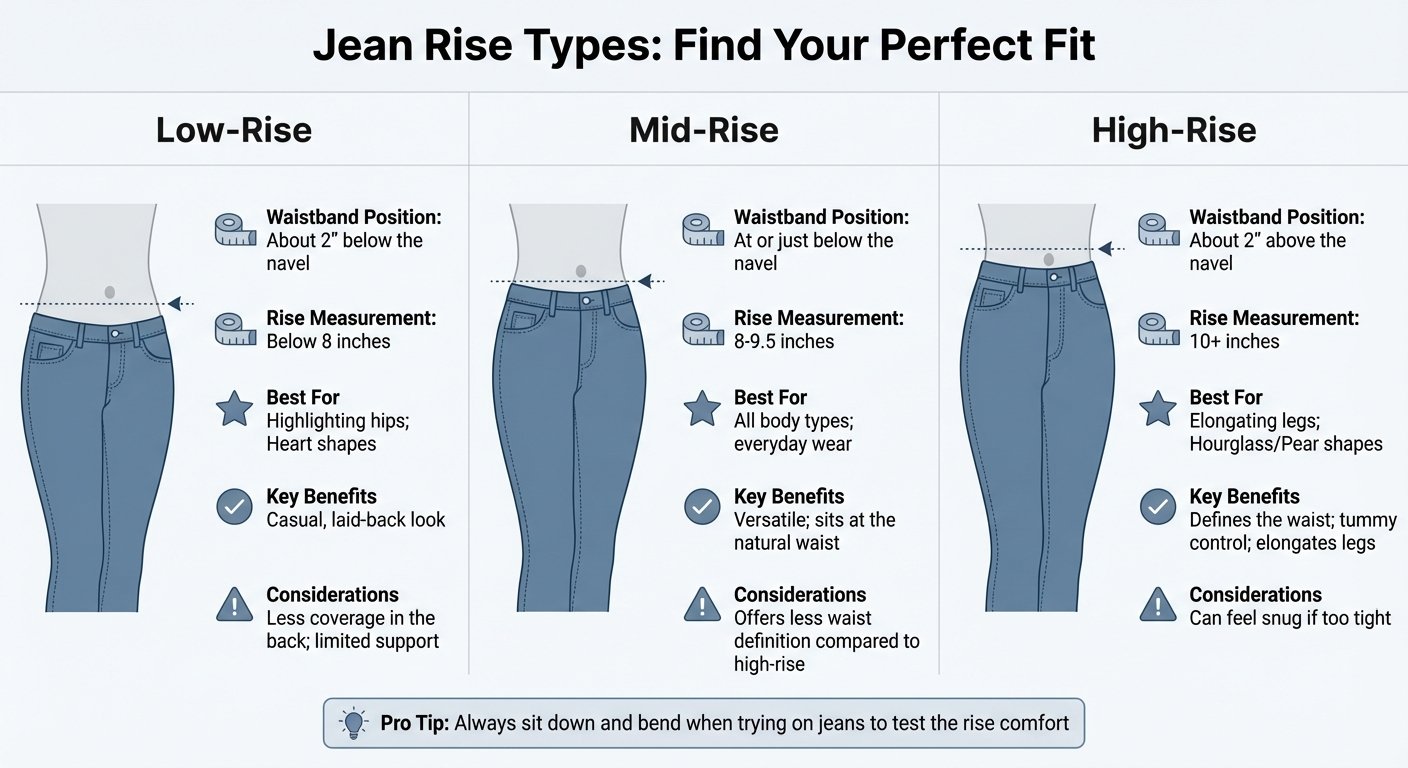
Jean Rise Types Comparison Guide: Low, Mid, and High Rise
Now that you’ve nailed down your measurements, it’s time to decide where you want your jeans to sit on your waist. This is determined by the rise, which measures the distance from the crotch seam to the waistband. The rise not only affects comfort but also plays a big role in the overall look of your jeans.
- Low-rise jeans sit about 2 inches below your navel and are great for showing off your hips.
- Mid-rise jeans rest at or just below your navel, making them a go-to for most body types due to their versatility.
- High-rise jeans sit roughly 2 inches above your navel, helping to define your waist, offer tummy support, and give the illusion of longer legs.
Your body shape can help guide your choice. For example:
- Rectangle shapes benefit from mid-rise or high-rise jeans to create a more defined waist.
- Hourglass and pear shapes look great in high-rise styles, which highlight curves and provide waist support.
- Apple or oval shapes often find mid-rise jeans the most comfortable as they sit at the natural waist.
- Heart shapes may prefer low-rise or mid-rise styles to balance their proportions.
"Mid-rise jeans sit at your natural waist, which makes them comfortable and classic." – Molly, Stylist, Stitch Fix
When trying on jeans, always test the rise by sitting and bending your knees. This helps ensure the waistband stays comfortable – no pinching, gapping, or digging in.
Low, Mid, and High Rise: What’s the Difference?
Here’s a quick breakdown to help you choose the best rise for your needs:
| Rise Type | Waistband Position | Best For | Key Benefits | Considerations |
|---|---|---|---|---|
| Low-Rise | About 2" below the navel | Highlighting hips; Heart shapes | Casual, laid-back look | Less coverage in the back; limited support |
| Mid-Rise | At or just below the navel | All body types; everyday wear | Versatile; sits at the natural waist | Offers less waist definition compared to high-rise |
| High-Rise | About 2" above the navel | Elongating legs; Hourglass/Pear shapes | Defines the waist; tummy control; elongates legs | Can feel snug if too tight |
The waistband should sit snugly without needing a belt to hold the jeans up. If you find yourself reaching for one, it’s likely the jeans are too big.
Common Jean Styles Explained
Beyond rise, the cut and style of your jeans are just as important for comfort and achieving the look you’re after. Let’s explore some popular styles:
- Straight-leg jeans: These maintain a consistent width from hip to ankle, offering a classic, balanced silhouette that suits all body types. They’re a polished alternative to skinny jeans and transition easily between casual and professional settings.
- Skinny jeans: Form-fitting from waist to ankle, these hug your thighs and calves. They pair well with oversized tops and work particularly well for athletic, apple, or hourglass shapes.
- Bootcut jeans: Fitted through the hip and thigh with a slight flare at the ankle, bootcut jeans are flattering for pear shapes and petite figures, as they help balance proportions.
- Boyfriend jeans: These have a relaxed, oversized fit through the thighs and waist, making them ideal for casual wear and flattering on a range of body types.
- Wide-leg jeans: Cut wide and straight from the hip down, with a hem circumference of at least 20 inches, these create a bold, breezy look. They’re especially flattering for rectangle, triangle, and taller body types.
- Mom jeans: Known for their high waist (9 to 11 inches above the crotch seam), baggy legs, and extra room around the hips, mom jeans are a comfortable option that also accentuates curves.
For a versatile option, consider mid-rise straight-leg jeans in a dark wash. They’re a wardrobe staple, perfect for everything from running errands to heading into the office.
"A do-it-all denim in a tailored, streamlined silhouette is essential… ideally with a bit of stretch for ease of movement and comfort." – Corina Gaffey, Celebrity Stylist
sbb-itb-9502fca
Step 3: Choose Comfortable Fabrics and Features
Now that you’ve nailed down your ideal fit, it’s time to focus on the fabrics and design details that will keep you feeling comfortable all day long. The right material and features can make a world of difference, especially as your body changes over time. With precise measurements and the perfect rise already in place, these fabric choices and design elements will complete your ultimate pair of jeans.
Stretch Denim and Recovery
Opt for stretch denim blends that include 1%–2% spandex or Lycra. This small amount of stretch allows the jeans to mold to your shape while still giving you the freedom to move. When shopping, check for "recovery" in the product description – this ensures the fabric bounces back to its original shape after wear, preventing sagging over time.
"The high rise feels like it contours my waist, defining its shape yet still allowing me to breathe." – Micaela English, Denim Devotee
Some brands go a step further by incorporating tummy-control panels into their designs. These panels provide smoothing support for the midsection without the restrictive feel of traditional shapewear. For example, Levi’s "Shaping" series and NYDJ’s "Lift and Tuck" technology include these features for a sleeker silhouette. Pull-on styles are another great option, as they eliminate the bulk of zippers and buttons under fitted tops.
When it comes to sizing, jeans with 2% or more stretch typically fit true to size. On the other hand, 100% cotton denim may require sizing up for added comfort.
Design Features for Comfort and Fit
Shaping panels are a game-changer for targeted support. Levi’s 318 Shaping Wide Leg jeans, priced between $40 and $70, include a built-in tummy panel that smooths and supports without causing gaps at the waist. For a more premium option, Mother‘s The Hustler Ankle Fray – ranging from $200 to $270 – is known for its lifting and shaping abilities.
For those who prefer a little more flexibility, look for jeans with around 3% stretch content. Additionally, contoured waistbands are worth considering. These are cut higher in the back to follow your natural curves, which helps eliminate that annoying gap at the small of your back – a feature especially beneficial for hourglass and pear-shaped figures.
| Feature | Primary Benefit | Price Range |
|---|---|---|
| Tummy-Control Panel | Smooths the midsection without restriction | $40–$100 (e.g., Levi’s, NYDJ) |
| High Recovery Stretch | Maintains shape and prevents sagging | $200–$270 (e.g., Frame, Paige, Mother) |
| Pull-on Waistband | Reduces bulk under fitted tops | Varies by brand |
| Contoured Waistband | Eliminates back gapping | Varies by brand |
Dark Washes and Inseam Lengths
Fabric stretch and structure are key, but wash and length also play a big role in achieving the best look and fit.
Dark washes like deep indigo or black are universally flattering and versatile. They work just as well for casual outings as they do for more polished occasions, and they’re great at hiding minor stains or wear. Meanwhile, light and medium washes are perfect for laid-back summer days or relaxed weekends. To maintain the rich color of dark jeans, turn them inside out, wash them in cold water, and air-dry them.
Inseam length is another critical factor. Here’s a quick breakdown based on height:
- Petite (5’3" and under): Stick to inseams of 29 inches or less. Cropped or ankle-length styles prevent overwhelming your frame.
- Regular (5’4" to 5’8"): Standard inseams usually work well, though styles may vary.
- Tall (5’9" and up): Look for inseams of 33 inches or longer. Some brands even offer options up to 37 inches for extra-long legs.
Many brands now offer a range of inseam options – such as 28, 30, 32, and 34 inches – so you can choose the right length for your preferred shoes. Shorter inseams pair beautifully with flats for everyday wear, while longer ones create a leg-lengthening effect when worn with heels.
If you’re leaning toward wide-leg jeans, aim for a floor-grazing inseam and pair them with block heels or wedges. This combination keeps the silhouette balanced and avoids cutting off your proportions at an awkward point. The extra length enhances the flow of the wide-leg style, ensuring a polished and flattering look.
Step 4: Budget-Friendly Brands and Styles
Once you’ve nailed down your measurements, rise, and fabric preferences, it’s time to shop smart without breaking the bank. There are plenty of brands out there offering stylish, well-made jeans under $100 that check all the boxes – comfort, fit, and style. This is especially true for women over 40 who know exactly what they want in a pair of jeans. Below, you’ll find a quick guide to affordable brands that deliver on all fronts.
Affordable Jean Brands Worth Trying
Levi’s is a timeless favorite for a reason. Their Shaping Series – like the 311 Shaping Skinny, 312 Shaping Slim, and 314 Shaping Straight – features a mid-rise design and a tummy-slimming panel for added comfort and style. If you’re after a vintage vibe, their iconic 501 Original and Ribcage styles are great picks.
Wit & Wisdom is another standout with its Ab-solution line, which incorporates slimming panels to smooth out your silhouette and prevent muffin tops. These jeggings are a hit at Nordstrom, boasting a 4.5-star rating from over 650 reviews.
NYDJ (Not Your Daughter’s Jeans) is a go-to for curvy figures. Their Marilyn Straight Pull-On style is particularly popular for its flattering waist and versatile straight-leg fit.
"Easy, figure-elongating construction" that "pairs well with everything."
– Kelsey Titlow
Madewell frequently offers deals that bring their jeans under $100. Styles like the Perfect Vintage and Boyjean are equipped with "Magic Pockets", which provide reinforced, smoothing support for a flattering look. Their Curvy Fit line is tailored for those with a 10-inch or greater waist-to-hip difference. The Roadtripper Skinny, another fan favorite, holds a 4.5-star rating from over 200 reviewers.
Kut from the Kloth delivers premium-feeling denim at a reasonable price. Options like the Meg Fab Ab and Catherine styles feature soft, stretchy fabrics and a relaxed fit. Meanwhile, Everlane focuses on sustainability with styles like The Original Cheeky Jean and Way-High, offering rigid yet comfortable fabrics. For those looking to balance out their hips and elongate their legs, Liverpool‘s Lucy Bootcut is a solid choice.
For shoppers on a tighter budget, Target’s Universal Thread line offers trendy options like vintage straight and ’90s loose fits, all at wallet-friendly prices. Gap is another excellent choice, with relaxed styles such as the ’90s Loose and Sky High. Plus, their Washwell™ program has saved millions of liters of water since 2016, making them a more eco-conscious option.
Recommended Jeans Comparison
Here’s a quick breakdown of some top picks to help you decide:
| Brand | Popular Style | Price Range | Best For | Inseam Options |
|---|---|---|---|---|
| Levi’s | 501 Original / Ribcage | $70–$98 | Classic, vintage look | Short, Regular, Long |
| Wit & Wisdom | Ab-solution Skinny/Jegging | $64–$88 | Tummy smoothing, comfort | Petite, Regular |
| NYDJ | Marilyn Straight | $77–$99 | Curvy figures, slimming | Petite, Regular, Tall |
| Kut from the Kloth | Meg Fab Ab / Catherine | $70–$95 | Soft stretch, relaxed fit | Regular, Plus |
| Liverpool | Lucy Bootcut | $98 | Balancing hips, leg length | Regular |
| Everlane | The Original Cheeky | $88–$98 | Lifting/tightening rear | Ankle, Regular |
| Target | Universal Thread Straight | $28–$40 | Budget-conscious trends | Short, Regular, Long |
| Gap | ’90s Loose / Sky High | $49–$99 | Relaxed, everyday wear | Petite, Regular, Tall |
When choosing your perfect pair, keep in mind that stretch jeans (like Madewell’s Perfect Vintage) tend to loosen up with wear, so sizing down might be a good idea. For versatility, dark indigo washes are a great choice – they’re polished enough for work but still casual for weekends. And for stretch jeans, a fabric blend with 1% to 2% elastane or spandex ensures they hold their shape throughout the day without sagging.
Conclusion
Finding jeans that fit like a dream boils down to four straightforward steps: getting accurate measurements, picking the right rise and style, choosing comfortable fabrics, and exploring budget-friendly brands. Start by measuring your natural waist, inseam, and rise – this takes the guesswork out of shopping and helps you navigate the frustrating inconsistencies in sizing across brands.
Once you’ve got your measurements, focus on selecting a rise that feels comfortable and provides the coverage you prefer. Look for denim with 2%-3% stretch for all-day wearability. Dark washes are a great choice for professional settings, while lighter washes bring a relaxed vibe perfect for weekends.
"It’s important that you don’t get hung up on the number – it’s the fit that counts, not the size on the label." – Marlene Montanez, Fashion Writer, Byrdie
Pay attention to how the jeans feel when you sit, bend, and move throughout your day. With sizing varying so much between brands, the number on the tag can often be misleading. A quick sit test can reveal whether the fit is truly secure and comfortable.
The most important thing? Prioritize comfort and confidence. The right pair of jeans should feel as good as they look, letting you move freely without constant adjustments or discomfort. Trust your instincts – if they don’t feel perfect, keep searching. With accurate measurements, a clear sense of style, and affordable options in mind, you’re fully equipped to find jeans that match your needs and elevate your wardrobe.
FAQs
How can I find the right rise for my body type?
Finding the perfect rise for your jeans starts with understanding both your body shape and the common rise options available. Here’s a quick breakdown of the three primary rises:
- Low rise (around 7–8 inches): These sit below your natural waistline.
- Mid rise (approximately 8–9 inches): These rest at or just above your belly button.
- High rise (roughly 9–10 inches): These sit at or above your natural waist.
When selecting the best rise for your body type, consider the following tips:
- Pear-shaped: Mid or high-rise jeans are ideal as they provide more coverage over the hips and give the illusion of a longer torso.
- Apple-shaped: High-rise jeans help smooth out the midsection and define your waist.
- Hourglass-shaped: A mid-rise works well to highlight your natural waist without cutting into it.
- Rectangle-shaped: Low or mid-rise jeans can help create the appearance of a more defined waist.
To find your natural waist, use a soft tape measure to locate the narrowest part of your torso – usually just above your belly button. Compare this measurement with the rise listed for the jeans you’re considering. When trying them on, pay attention to comfort. The rise should feel snug but not restrictive, with no pinching or gapping when you sit, bend, or move. By focusing on these details, you can find a rise that flatters your shape and keeps you comfortable all day long.
What are some affordable brands that offer quality jeans for women over 40?
If you’re on the hunt for jeans that are both stylish and comfortable without emptying your wallet, there are plenty of great brands to explore. Levi’s, Wrangler, and Lee have long been trusted for their quality and durability, making them timeless go-to options. For a more modern vibe at affordable prices, take a look at Uniqlo, Gap, or Old Navy. If you’re after trendy designs that don’t sacrifice your budget, Everlane and H&M offer stylish choices that cater to a wide range of preferences and body types.
These brands offer everything from classic cuts to contemporary styles, ensuring there’s something for every taste and occasion. Many of them also prioritize inclusive sizing and comfort, making them especially appealing for women over 40 who want to look great while feeling at ease.
How can I keep my jeans from losing their shape over time?
To keep your jeans looking great and holding their shape, it’s all about smart care and thoughtful choices. First off, don’t overdo it with the washing – only clean them when absolutely needed. For small stains, spot-clean instead of tossing them in the wash. When it’s time to wash, turn your jeans inside out, use cold water, and stick to a gentle cycle. This helps protect the fabric and maintain the color. Skip the dryer altogether – air drying is your best bet. Lay them flat or hang them by the waistband to dry, which helps preserve their structure.
When buying jeans, look for pairs with a touch of stretch – about 2–3% elastane is ideal. This gives you comfort without sacrificing the fit. After washing, reshape your jeans while they’re still damp by gently pulling on the legs and waistband to bring them back to their original form. Storage matters, too. Fold them neatly or hang them by the waistband to prevent unnecessary stretching. With these simple steps, your jeans will stay comfortable and keep their flattering fit for the long haul.