
Rotating your wardrobe by season keeps your closet organized, makes daily dressing easier, and extends the life of your clothes. Here’s the quick process:
- Declutter First: Empty your closet, sort items into "keep", "donate/sell", and "maybe." Let go of anything you haven’t worn in a year.
- Sort by Season: Group clothes based on your local climate, not just the calendar. Keep versatile, year-round essentials accessible.
- Store Properly: Use the right containers for each fabric (e.g., breathable bags for wool, plastic bins for cotton). Clean everything before storing, and label containers clearly.
- Plan Rotations: Schedule wardrobe changes in early spring and fall. Pair this with seasonal cleaning tasks for efficiency.
- Build a Flexible Wardrobe: Invest in neutral basics and layer-friendly pieces. Use accessories to tweak outfits for changing weather.
Early Spring Closet Swap (Quick & Simple Seasonal Reset)
sbb-itb-9502fca
Step 1: Review What You Currently Own
The first step in preparing for a seasonal wardrobe rotation is taking stock of what you already have. Start by completely emptying your closet. Yes, everything. This not only clears the space but also ensures you can see your entire inventory. Overcrowded closets can hide items, leading to unnecessary purchases or forgotten favorites. A thorough review is the foundation for organizing and rotating your wardrobe effectively.
Sort and Remove Unwanted Items
Once everything is out, it’s time to sort. Start by applying the One-Year Rule: if you haven’t worn something in the past year, it’s time to let it go. This helps you focus on what you actually use versus what you think you might wear someday. Samantha Pregenzer, a Certified Professional Organizer, offers a helpful mindset:
"Pretend the closet is a clothing store when beginning to weed out clothing – ask yourself ‘What would I buy again?’"
If you wouldn’t buy it today, it probably doesn’t deserve a spot in your wardrobe now.
Divide your clothing into three piles: Keep & Love, Donate or Sell, and a small Maybe pile for items you’re unsure about but feel attached to. For the Maybe items, set a reminder to revisit them in six months. And don’t delay – plan out donation or selling logistics right away to avoid creating new clutter.
Find Missing Pieces and Duplicates
As you sort, take note of what’s missing from your wardrobe. Maybe you’ve got five black sweaters but not a single lightweight cardigan for spring. Writing down these gaps now will help you avoid impulse buys later. Similarly, identify duplicates that you don’t need – those five black sweaters might be a bit much.
To keep your closet functional and organized, The Home Edit advises keeping it no more than 80% full at all times. That extra 20% breathing room makes a huge difference. It prevents your wardrobe from feeling overwhelming and makes it easier to spot duplicates or missing essentials during seasonal transitions.
Step 2: Separate Clothing by Season
Once you’ve reviewed your wardrobe, the next step is to sort your clothing by season. This makes daily dressing easier and more efficient. But don’t just rely on a standard calendar – your local climate should guide your choices. For instance, someone in Florida might wear summer clothes most of the year, while a Minnesotan needs heavy winter gear and snow-ready outfits. Start by organizing your wardrobe into clear seasonal categories.
Set Up Your Seasonal Categories
Sort your clothes based on how weather patterns unfold where you live, rather than sticking strictly to the four traditional seasons. Begin by grouping items by their weight and layering potential. For example, thick wool sweaters are perfect for winter, while tank tops and shorts belong in summer. Medium-weight items, like cardigans, can be tricky – decide if they’re better suited for fall layering or as transitional pieces.
Tailor your categories to fit your lifestyle. If you spend a lot of time at the beach, a "beach clothes" category might make sense for summer. Similarly, "snow clothes" could be a useful winter category if you live in a snowy region. As you sort, inspect each piece for stains, tears, or other damage. Address these issues before storing items to avoid surprises later. This is also a good time to identify anything that might need dry cleaning or repairs.
Keep a small selection of versatile, year-round essentials – like lightweight jackets, neutral cardigans, or layering basics – readily available. This is especially helpful for unpredictable weather. As Closet Factory points out:
"A couple pieces of fall clothes kept out in warmer seasons can save you on the occasion that it gets colder than you expected."
This tip is particularly useful for places with extreme temperature swings, like desert climates, where warm-weather items might still come in handy during winter.
Plan Your Rotation Schedule
To stay organized, plan two wardrobe rotations each year: one in early spring and another in early fall. Ed Hammill, Owner of Distinctive Closets & Garage, shares why this method works:
"Planning your wardrobe rotation in early spring and early fall creates consistency. Adding it to your calendar transforms it into a routine instead of a reactive chore."
Pair this rotation with other seasonal tasks, like deep cleaning, to make the process more manageable. Before storing anything, take photos of your labeled bins or create a digital inventory. This small step can save you from accidentally buying duplicates when the seasons change.
Step 3: Store Off-Season Clothes Correctly
Once you’ve sorted your clothes by season, storing off-season items the right way helps maintain their condition and frees up valuable closet space through personalized fashion curation. The key is choosing the right storage method for each type of fabric. As The Home Edit puts it:
"The top priority when choosing long-term storage should be protecting your clothing. Since all fabrics or materials require a different level of care, choosing the right container comes down to the item."
Before packing items away, make sure everything is clean. Wash or dry-clean each piece to remove body oils, perfumes, or any hidden stains that could attract pests or damage the material over time. Also, check for minor issues like loose buttons or broken zippers and fix them before storing.
Pick the Right Storage Containers
Choosing the right container for each fabric type is essential. For cotton clothing, clear plastic bins work well because they’re durable, stackable, and let you see what’s inside. For bulkier items like jeans or sweatshirts, vacuum-sealed bags can save space – just avoid using them for delicate fabrics or down-filled items, as they need more breathing room.
For delicate materials like silk, cashmere, and wool, opt for breathable canvas or linen bins instead of plastic. Wrapping these pieces in acid-free tissue paper can help maintain their color and protect them from dust. Down coats and puffer jackets should be hung in breathable garment bags to keep their filling intact.
To ward off pests and moisture, use cedar blocks, lavender sachets, or dehumidifier packs. Leather jackets and shoes benefit from being stuffed with acid-free paper to hold their shape. For shoes, under-bed organizers with compartments can keep them organized and protected.
Label Your Storage Containers
Labeling is a simple but effective way to make seasonal transitions easier. Use clear labels to identify the contents, such as "Winter Sweaters" or "Summer Dresses", so you can find items quickly. Ed Hammill, the owner of Distinctive Closets & Garage, emphasizes:
"Clear storage solutions make seasonal transitions far more efficient. When everything is visible and categorized, you avoid the frustration of digging through unmarked containers."
Store these labeled bins in a cool, dry location, such as on top shelves, under the bed, or in a guest closet. This final step ensures your off-season clothes are safe, accessible, and ready for the next rotation.
Step 4: Create a Mix-and-Match Wardrobe
Now that your off-season clothes are stored, it’s time to focus on building a wardrobe that makes daily styling easy. The key? Pick pieces that can be layered and styled in multiple ways to keep things simple and stress-free.
Choose Multi-Purpose Basics
Start with neutral essentials that work across seasons. Think about items like dark jeans or a classic button-down. These are staples that adapt easily – pair the jeans with a tank top in summer, or throw on a sweater when it gets chilly. Similarly, a button-down can stand alone in warmer weather or be layered under a cardigan as the temperature dips.
Consider investing in high-quality basics, such as a tailored blazer, a crew-neck sweater, and a neutral t-shirt. These pieces are the backbone of a wardrobe that offers endless combinations. For outerwear, a lightweight trench coat is a smart choice – it’s perfect over dresses in spring and just as practical layered over sweaters in the fall.
To make sure your wardrobe is as versatile as possible, focus on creating a cohesive color palette that ties everything together.
Use a Coordinated Color Scheme
A well-thought-out color scheme makes mixing and matching your clothes almost effortless. Start by identifying your skin’s undertone – this can guide your choice of neutrals. For example, warm undertones pair beautifully with shades like cream, camel, and chocolate, while cool undertones shine in charcoal, crisp white, and cool gray.
Build your wardrobe around 2–3 core neutral colors that match your undertone, and then add 3–5 accent colors that complement both your neutrals and your skin tone.
Angela Howenstein sums it up perfectly:
"Monochrome neutrals make $30 jeans look Céline-level classy. Pro tip: match shade families so your eye sees harmony, not price tags."
For instance, a navy blazer paired with navy trousers and a lighter blue shirt creates a polished, cohesive look – no need for high-end pieces. When your wardrobe is built to work together seamlessly, you’ll spend less time stressing over outfits and more time enjoying clothes that actually serve you. This strategy not only simplifies your daily choices but also maximizes the practicality of your seasonally organized closet.
Step 5: Use Accessories to Shift Between Seasons
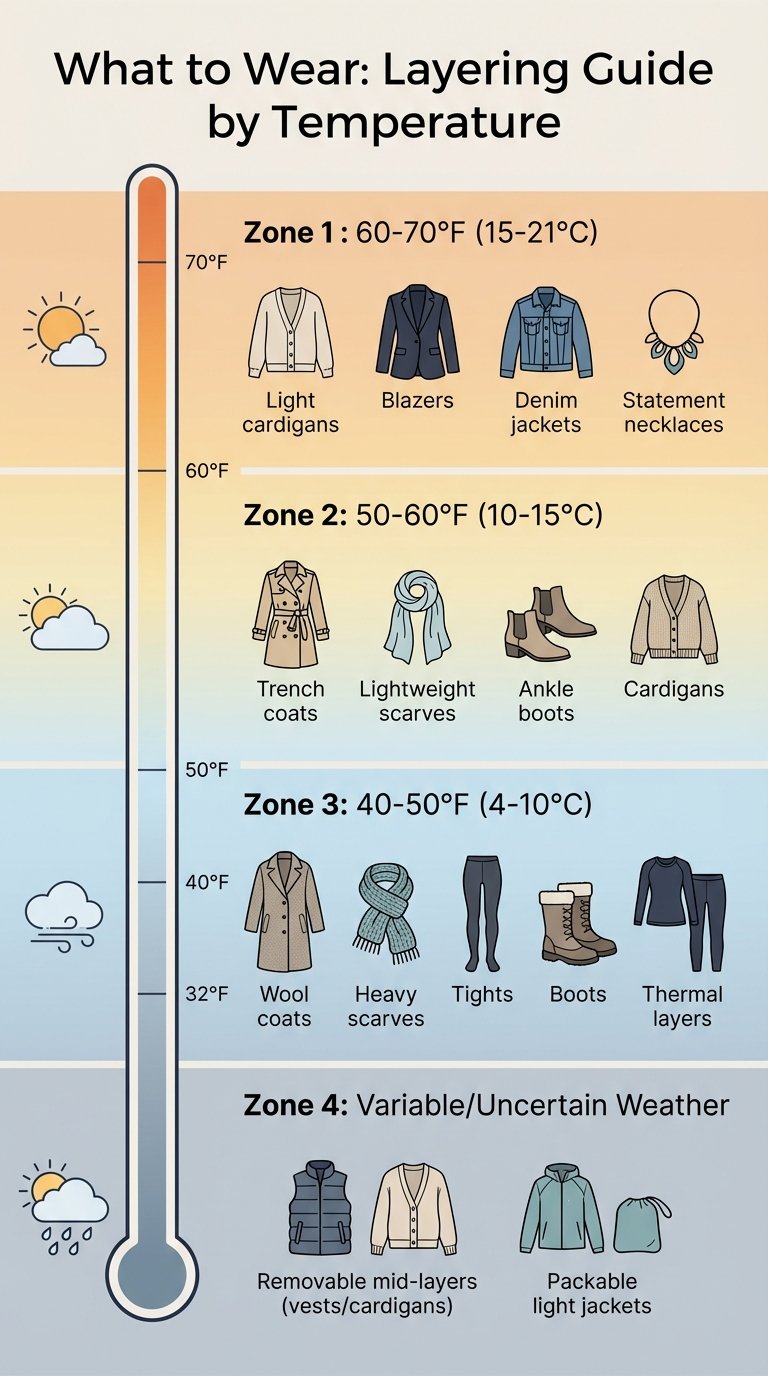
Layering Accessories Guide by Temperature Range
Once you’ve built a wardrobe that works year-round, accessories become your secret weapon for seasonal transitions. They let you refresh your look without overhauling your closet. Instead of buying all new clothes, switch up your scarves, bags, jewelry, and shoes to match the season.
Swap Accessories by Season
One of the quickest ways to update your style? Swap out your handbag. Moving from a dark winter bag to a lighter, neutral option instantly updates your outfit – even when you’re still wearing a heavier coat. Try keeping a small collection of accessories on hand: two layering necklaces, a pair of everyday earrings, statement earrings, a couple of hair accessories, and a versatile bag. For seasonal jewelry updates, trade chunky winter styles for softer, more delicate pieces. For instance, replace simple studs with medium hoops or modern drop earrings to add a touch of elegance to cozier outfits.
Hair accessories are another easy way to adapt. Use a claw clip for a quick updo on blustery days or a headband to polish off loose waves. These small changes keep your look fresh while complementing your wardrobe’s seasonal rotation.
Add Layers for Temperature Changes
A smart layering system can help you navigate unpredictable weather. Think in three layers: a base (like tanks or tees), a mid-layer (such as cardigans or button-down shirts), and an outer layer (like trench coats or scarves). Neutral cardigans, in particular, are a wardrobe MVP – they pair well with almost any outfit and can be easily removed when the day warms up.
Ed Hammill, Owner of Distinctive Closets & Garage, highlights the importance of keeping transitional pieces within reach:
"Weather shifts can be unpredictable, which is why a transitional section is helpful. Keep lightweight jackets, neutral cardigans, or layering pieces accessible throughout the year".
This strategy saves you from rummaging through storage when temperatures suddenly change. For example, you can layer tights and a cardigan over a summer dress to make it fall-appropriate. Neutral leather ankle boots are another versatile choice, carrying you from fall to early spring with ease.
To help you plan your layering accessories, here’s a quick temperature guide:
| Temperature Range | Recommended Layering Accessories |
|---|---|
| 60-70°F (15-21°C) | Light cardigans, blazers, denim jackets, statement necklaces |
| 50-60°F (10-15°C) | Trench coats, lightweight scarves, ankle boots, cardigans |
| 40-50°F (4-10°C) | Wool coats, heavy scarves, tights, boots, thermal layers |
| Variable/Uncertain | Removable mid-layers (vests/cardigans), packable light jackets |
Conclusion: Keep Your Seasonal Wardrobe System Running Smoothly
A seasonal wardrobe rotation isn’t just a one-and-done task – it’s an ongoing habit. Plan a biannual rotation to keep your closet organized and practical. By setting reminders, you can approach the process with intention rather than scrambling last minute. This regular upkeep not only streamlines your space but also helps your clothes last longer.
Rotating your wardrobe also ensures you’re making the most of what you own. Studies show that most people only wear about half of their clothing. A consistent rotation lets you rediscover overlooked items, giving you the chance to decide whether to keep, donate, or repurpose them. Plus, you’ll catch small issues like loose buttons or unraveling hems before they turn into bigger problems. Knowing exactly what’s in your closet also helps curb impulse buys, saving you money and reducing clutter.
Ed Hammill, the Owner of Distinctive Closets & Garage, sums it up well:
"When your closet works with you instead of against you, every season feels a little lighter and a lot more manageable".
To keep your system running smoothly, designate a small section of your closet for transitional pieces that work year-round. Documenting your storage setup can also save you from rummaging through boxes when the weather takes an unexpected turn.
Your wardrobe should simplify your life, not complicate it. Stick to your rotation system, and you’ll enjoy a closet that feels refreshed, organized, and ready for whatever the seasons throw your way.
FAQs
How do I rotate clothes if my area doesn’t have four seasons?
If you live in a place without clear seasonal changes, try organizing your wardrobe based on your local weather patterns – think hot, mild, or cold. Store clothes that aren’t suited for the current conditions in clean, easy-to-reach spaces. Also, keep a small section of versatile, transitional pieces that can handle shifts in temperature. This approach helps keep your wardrobe tidy and tailored to your climate.
What’s the best way to store delicate fabrics like wool or cashmere?
To keep delicate fabrics like wool or cashmere in good shape, it’s best to fold them rather than hang them, as hanging can stretch the material. Use breathable containers such as cotton storage bags or cardboard boxes to store these items. Make sure the storage space is cool, dry, and free of moths to protect the fabrics from damage. Taking these steps helps prevent shrinkage, distortion, and other problems, so your garments remain in excellent condition.
How do I build a small “transitional” section for unpredictable weather?
To build a transitional wardrobe for unpredictable weather, prioritize pieces that are easy to layer. Think cardigans, lightweight jackets, or trench coats – items you can slip on or take off as temperatures shift. Include versatile staples like long-sleeve tops, thin sweaters, or blouses that can be worn under or over other layers. This way, you can adjust to changing weather without revamping your entire closet.