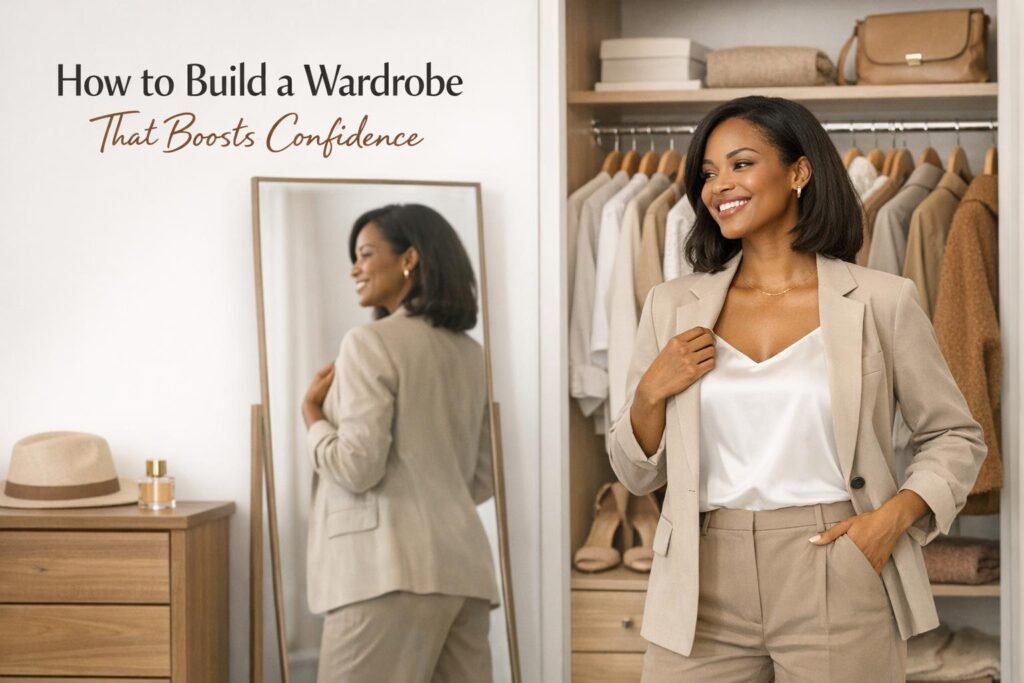
What you wear impacts how you feel. Confidence starts with a wardrobe that fits your life and reflects who you are today. This guide breaks down practical steps to help you declutter, invest in timeless essentials, and add personal touches to your style – all while keeping things simple and functional.
Key Takeaways:
- Declutter First: Audit your closet with a closet cleanse by sorting items into "keep", "tailor", "donate", and "maybe." Use tests like the "Buy It Today" or "Laundry Test" to make decisions.
- Focus on Basics: Invest in versatile staples like dark jeans, white shirts, and blazers. Each piece should work in at least three outfits.
- Add Personality: Use bold colors, patterns, and accessories to reflect your style. Statement pieces should make up about 15% of your wardrobe.
- Stay Organized: Group clothes by type and color. Use tools like wardrobe apps or the Reverse Hanger Method to keep track of what you wear.
Confidence starts with clothes that fit, flatter, and simplify your life. Let’s dive into the details.
4-Step Guide to Building a Confidence-Boosting Wardrobe
11 Ways to Build Confidence Through Personal Style
sbb-itb-9502fca
Step 1: Review Your Current Wardrobe
Before you start adding new clothes, take a closer look at what you already own. Most women have more clothing than they actually use.
Do a Closet Audit
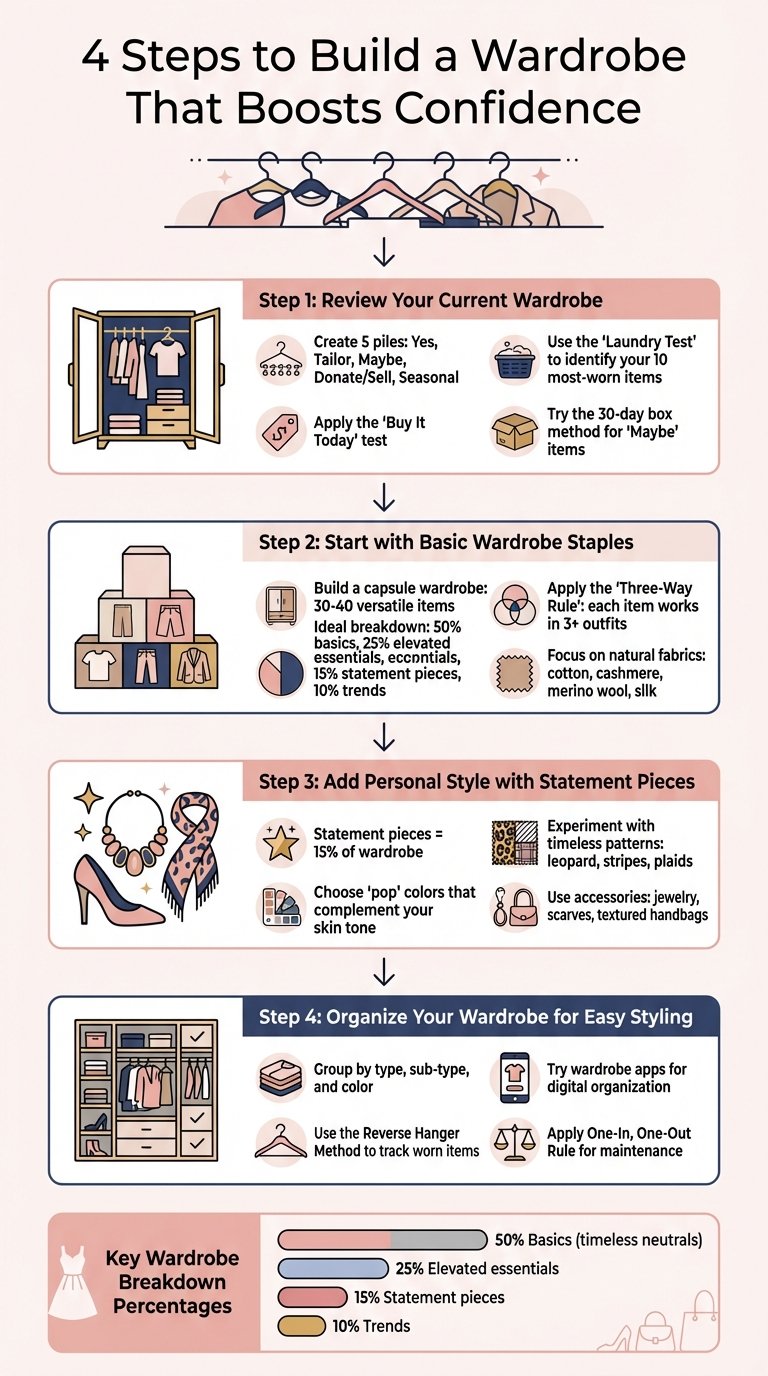
Start by organizing your wardrobe into five clear piles: Yes (you love it and it fits), Tailor (needs minor adjustments), Maybe (you’re unsure), Donate/Sell (it no longer serves you), and Seasonal (store it for a different time of year). This method pushes you to make firm decisions instead of endlessly shifting things around.
Try everything on – clothes often feel and fit differently on your body than they appear on a hanger. While assessing each item, apply the "Buy It Today" test: if you wouldn’t pay full price for it now, it’s probably time to let it go. Fashion expert Tahirah Christine sums it up perfectly:
"Your style shouldn’t be aspirational. It should be available. Right now. In your size. In your real life".
Beware of the "Maybe One Day" trap – those clothes you’re saving for a future weight, a new job, or an event that may never happen. Stylist Megan Kristel explains:
"Clothes that are too small, too big, or tied to a different season of life don’t belong in your day-to-day space. They take up more than just physical room – they take up emotional bandwidth, too".
For the "Maybe" pile, place those items in a box and set it aside for 30 days. If you don’t miss or use anything in that box, it’s likely you’re holding onto them for emotional reasons rather than practical ones.
The "Laundry Test" is another great way to identify your true wardrobe staples. Take note of the pieces you’re constantly washing because you wear them so often. Lay out your 10 most-worn items and look for patterns in color, fabric, and style – these are your "style clues" that highlight what truly works for you.
Once you’ve identified your essentials, it’s time to figure out what’s missing.
Find Missing Wardrobe Pieces
Decluttering not only sharpens your style but also helps you feel more confident. When the excess is gone, the gaps in your wardrobe become much clearer. Start by mapping out how you actually spend your time – maybe it’s 60% working from home, 20% running errands, 10% socializing, and 10% attending formal events. If your closet is full of cocktail dresses but you only go to parties once a month, you’ve uncovered a major imbalance.
To identify gaps, use the "Three-Way Rule": every item you keep should be wearable in at least three different outfits using pieces you already own. For example, if your favorite navy blazer doesn’t pair well with anything else, you might need neutral trousers or a simple white tee to make it more versatile.
A well-rounded wardrobe typically breaks down into 50% basics (timeless neutrals), 25% elevated essentials (basics with a twist), 15% statement pieces, and 10% trends. Many women find they’re lacking in the "elevated essentials" category – those pieces that bridge the gap between everyday basics and special occasion wear. As a practical guide, aim for 7–10 work outfits, 5–7 casual outfits, and 3–5 formal looks.
Finally, create a "Wardrobe Wish List" based on what would make your "Yes" pile even more functional. Instead of shopping aimlessly, you’ll have a clear idea of what you need – like a neutral belt to style multiple dresses or a structured cardigan to layer over different tops.
Step 2: Start with Basic Wardrobe Staples
After clearing out your closet, it’s time to rebuild with pieces that simplify your life. A well-thought-out wardrobe isn’t about quantity – it’s about having options that work together seamlessly. The goal is to create a collection of essentials that make getting dressed easy and stress-free.
Must-Have Pieces Every Woman Should Own
Think of wardrobe staples as your foundation – they take the guesswork out of outfit planning and give you room to experiment. A capsule wardrobe typically includes 30–40 versatile, high-quality items. Focus on selecting pieces that align with your daily life.
Start with dependable tops like a classic white T-shirt, a silk blouse, or a crisp button-down. These are the backbone of countless outfits. For bottoms, go for dark-wash jeans (opt for ones with less than 2% Lycra to maintain their shape), tailored trousers, and a midi skirt to cover a variety of occasions . Add a Little Black Dress and a shirtdress for polished, easy-to-style options.
Outerwear ties everything together. A tailored blazer is a must-have. As Cedar & Lily Clothier puts it:
"A well-fitting blazer doesn’t just change your outfit – it changes how you carry yourself. It’s confidence you can literally put on".
Complement your blazer with a trench coat for more formal settings and a denim jacket for casual outings. When it comes to footwear, prioritize white sneakers, ankle boots, and classic pumps. These options balance comfort with timeless style.
The secret to a great foundational wardrobe is versatility. Each piece should work in at least three different outfits. For example, a silk blouse can transition effortlessly from a professional meeting to a relaxed weekend brunch. Once you’ve gathered these staples, focus on ensuring they fit perfectly and are made from quality materials.
Focus on Fit and Fabric Quality
Fit is everything. Forget about the label and pay attention to how clothes complement your body shape – whether you’re hourglass, pear, apple, athletic, or diamond-shaped . Stylist Megan Kristel sums it up perfectly:
"A simple outfit looks intentional when everything fits you beautifully".
Tailoring can make all the difference. Choose garments that fit the widest part of your body, such as your hips, and have them altered at the waist for a custom look .
Fabric quality is equally important. Natural fibers like Pima or Supima cotton, cashmere, merino wool, and silk are not only more breathable but also more comfortable than synthetic materials . For example, organic cotton is stronger than conventional cotton and holds up better over time. Always check the fiber content label and prioritize natural fabrics over polyester, nylon, or acrylic.
To spot quality fabrics without breaking the bank, try the light test: hold the fabric up to a light source. Durable fabrics will be tightly woven and allow minimal light to pass through. Also, pay attention to details like high stitch counts, well-sewn buttons (bonus points if spares are included), and properly lined structured garments. Avoid thin, see-through materials that wear out quickly.
Investing in quality pieces can save you money in the long run. For instance, you can find high-quality white T-shirts for as little as $8–$14, and cashmere sweaters for under $75 from brands like Quince. Wardrobe consultant Molly Cohen explains:
"When you invest in quality pieces, you won’t have to replace items as much so you’ll wind up saving in the long run".
To shop smart, take advantage of end-of-season sales, browse secondhand or consignment stores, and sign up for brand apps to unlock exclusive deals . Stick to 2–3 neutral colors like black, navy, gray, or beige as your wardrobe base for easy mixing and matching .
Step 3: Add Personal Style with Statement Pieces
Once you’ve nailed the basics of your wardrobe, it’s time to bring in some personality. Statement pieces – those bold, eye-catching items – are your secret weapon for showcasing your unique style. These pieces, which should make up about 15% of your wardrobe, have the power to turn simple outfits into something truly memorable. Katie Mander, from The Wardrobe Consultant, sums it up perfectly:
"Statement Pieces are the hero pieces of your outfit. They play a crucial role in transforming a basic outfit into something more captivating and uniquely you".
A great statement piece combines multiple standout elements, like a bold color, an unusual design, and striking patterns. To ensure these pieces reflect your personality, consider creating a Personal Style Vision Board. This can help you pinpoint your favorite colors, shapes, and textures, steering you toward pieces that feel authentically "you" rather than just following trends.
From there, focus on refining your choices with thoughtful use of colors and patterns.
Use Color and Patterns
Colors can do wonders for your look, especially when you pick tones that complement your complexion. Identify your "pop" colors – vibrant shades like red, pink, or bright blue – that work with your skin undertones. If your wardrobe leans heavily on black, consider swapping it out for softer alternatives like navy, grey, camel, or caramel tones, especially near your face. Personal Stylist Natalie Baker highlights:
"Wearing a color that’s not black, close to your face, is also much more flattering for mature skin".
Patterns are another way to add interest without going overboard. Timeless prints like leopard, stripes, and plaids are versatile enough to work as statement foundations. Gingham is another great option for injecting a bit of charm into your outfits. For silhouettes, try experimenting with oversized blazers, wide-leg jeans, or asymmetrical hems. Before committing to any bold piece, use the "Three Ways" rule: can you think of at least three ways to style it with items you already own? If not, it might be worth passing on.
Try Different Accessories
Accessories are the finishing touches that can make even the simplest outfit stand out. They’re also a fun, low-pressure way to experiment with bold trends. Sophie Davies, a writer and jeweler, captures their magic:
"Accessories are where you can really have some real fun. They’re the finishing touches that allow you to express your personality and add a personal touch to your outfits without overwhelming your look".
Start with jewelry. Mixed metal necklaces, enamel "smile" necklaces, arc earrings, or bold hoops can instantly elevate a plain white tee. A layered statement necklace, for example, can add polish and intention to even your most basic looks. Beyond jewelry, functional accessories like textured handbags (shoulder or crossbody styles), silk scarves, or vibrant coats can bring extra flair to your wardrobe.
If you’re hesitant to commit to bold trends, renting statement pieces is a great way to test the waters. Rental services typically cost around $100 per month for six to ten items. Even budget-friendly statement pieces can make an impact if they fit well – basic tailoring starts at about $15. For a more sustainable option, check out consignment and luxury resale shops, where you can snag designer statement pieces for 40% to 80% off retail prices.
Step 4: Organize Your Wardrobe for Easy Styling
An organized wardrobe isn’t just about aesthetics – it’s about simplifying your daily routine and reducing stress. A cluttered closet can increase stress hormone levels, while a tidy one helps you find what you need quickly, saving time and energy. The goal? A system that keeps your wardrobe visible, accessible, and easy to maintain.
Set Up a Practical Closet Layout
Once you’ve refined your wardrobe, it’s time to create a closet layout that works for you. Start by categorizing your clothes – group them by type, sub-type, and color. Not only does this make everything easier to find, but it also gives your closet a boutique-like feel, making outfit selection a breeze.
Professional organizer Meaghan Kessman shares her insight:
"A well-organized closet is easily accessible, clutter-free, neatly categorized by type and color, and visually calming."
To take it a step further, divide your closet into zones. Place your everyday essentials at eye level, while less frequently used items, like seasonal or formal wear, can go on higher or less accessible shelves. Tina Priestly, founder of Ready, Set, Refresh!, recommends:
"Items should be placed in zones for each access. Things you use most often can be in the eye line; less regular items can go in top or bottom spaces."
Maximize space by swapping bulky hangers for slim, felt ones that prevent slippage. Use clear bins for accessories, and file-fold items in drawers so everything is visible at a glance. Want an easy way to identify unworn clothes? Try the Reverse Hanger Method: hang all your clothes backward, and flip the hanger forward after wearing an item. After six months, donate anything still hanging backward.
Use Wardrobe Apps or Journals
Technology can be a game changer for closet organization. Apps like Fits – Outfit Planner & Closet, with a 4.6-star rating on the Apple App Store and over 2,800 reviews, let you photograph and categorize your wardrobe, plan outfits, and even receive AI-driven styling tips. While users love the background removal tool for creating polished digital wardrobe images, some find tagging items manually a bit tedious.
Prefer a more hands-on approach? Create a digital lookbook of your favorite outfits or a Lifestyle Diagram to map out how your wardrobe supports different aspects of your life – like work, home, and social events.
To maintain your system long-term, adopt the One-In, One-Out Rule: for every new piece you add, remove one that no longer serves you. Keep a discard bag handy for items that don’t fit or flatter your style, and aim for a deep closet refresh twice a year, with quick monthly tidying sessions. This simple routine keeps your wardrobe organized and aligns perfectly with your updated styling habits.
Conclusion: Build Confidence Through Your Style
Key Steps to Crafting a Confidence-Boosting Wardrobe
Let’s break down the essentials for creating a wardrobe that empowers your confidence.
Start by decluttering your closet using the 90/90 rule: if you haven’t worn an item in the past 90 days and don’t plan to wear it in the next 90, it’s time to let it go. Clearing out unused items not only frees up physical space but also helps you feel mentally lighter.
Next, focus on investing in high-quality basics that fit you perfectly. Timeless pieces like dark-wash jeans, a crisp white shirt, and a tailored blazer in neutral tones are versatile building blocks for any outfit . Once you’ve nailed the essentials, bring in your unique flair with accent colors, interesting textures, and bold accessories that reflect your personality. As professional stylist Jennifer Sattler explains:
"Women feel great when they become the authority of fashion in their own life and the best versions of themselves".
Lastly, keep your closet organized so you can see everything at a glance. As Gab Saper wisely notes, if an item is hidden, you’re likely to forget it exists. These simple yet effective steps can transform your wardrobe into a tool for expressing confidence and individuality every single day.
Explore More Style Inspiration with Angela Howenstein
For more outfit ideas, shopping recommendations, and practical styling tips designed for women over 40, check out Angela Howenstein. From affordable yet chic finds to real-life wardrobe advice, Angela’s insights make building confidence through fashion both approachable and fun.
FAQs
How do I discover my personal style to create a wardrobe I love?
Understanding your personal style starts with figuring out what suits your body, lifestyle, and preferences. Take a moment to identify your body shape and choose clothes that highlight your best features, helping you feel both confident and comfortable. Then, think about how your wardrobe fits into your everyday life – whether you need casual outfits, professional attire, or pieces that can do a bit of both.
Next, consider the styles that truly speak to you. Are you drawn to classic, modern, bohemian, or maybe eclectic looks? Reflect on the outfits that make you feel like yourself and give you a sense of ease. When your wardrobe matches your personality and daily needs, getting dressed becomes simpler – and you’ll feel more confident every time you step out the door.
How can I keep my closet organized over time?
Keeping your closet organized comes down to forming good habits and sticking to them. One of the simplest ways to stay on top of things is to declutter regularly – schedule a day every few months to sort through your wardrobe. Let go of clothes you no longer wear or need, and you’ll find it easier to manage what’s left while ensuring your closet is filled with pieces you actually enjoy.
To make your space both functional and visually pleasing, group similar items together – think tops, pants, or dresses – and, if you’re up for it, arrange them by color. Small touches like using matching hangers can give your closet a polished, put-together feel. Storing out-of-season clothes separately is another smart move, as it frees up room for what you’re currently using. A quick tidy-up once a week can also go a long way in keeping things under control. Plus, an organized closet doesn’t just save time – it can make getting dressed a more enjoyable and confidence-boosting experience.
How can I pick statement pieces that showcase my personality?
Choosing standout pieces that truly represent your personality begins with selecting items that make you feel confident and comfortable in your own skin. Think about what sparks joy when you wear it – whether it’s a striking accessory, a favorite bold color, or an eye-catching pattern that feels like you.
Rather than chasing fleeting trends, focus on what genuinely fits your taste and lifts your mood. Your clothing should reflect you, acting as a natural extension of your personality. Pick items that celebrate your uniqueness and allow you to express yourself with ease.