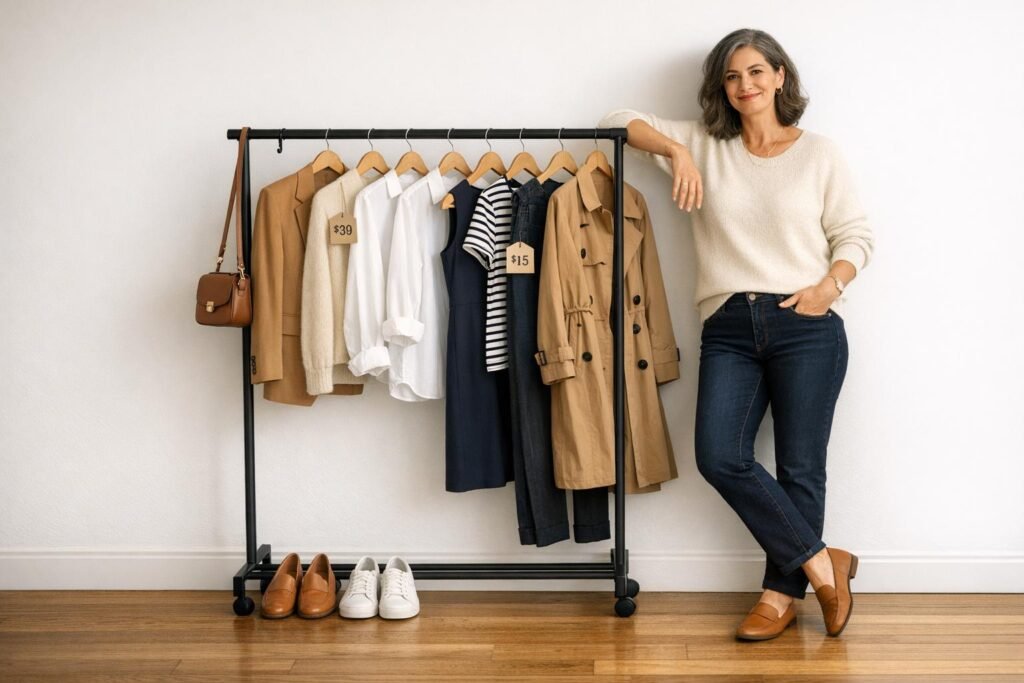
Building a stylish wardrobe in your 40s and beyond doesn’t have to cost a fortune. The key is to focus on thoughtful purchases that match your lifestyle, fit well, and work together seamlessly. This article dives into practical strategies for defining your style, making smarter shopping choices, and creating a capsule wardrobe that balances affordability with sophistication.
Here’s a quick summary of the approach:
- Define Your Style: Align your wardrobe with your daily life and use the P.L.A.N. formula (Place, Look, Afford, Need) to guide purchases.
- Invest in Basics: Start with 10 must-have items like well-fitted jeans, a structured blazer, and neutral layering tops.
- Shop Smart: Use thrift stores, end-of-season sales, and loyalty programs to find quality pieces at lower prices.
- Mix High and Low: Combine affordable basics with standout investment pieces for a polished look.
- Refresh Strategically: Tailor existing clothes, "shop your closet", and add small seasonal updates to keep your wardrobe current.
When every piece in your closet serves a purpose, you’ll save money, reduce clutter, and always feel put-together. Let’s break it down step by step.
How to Look Polished on a Budget (Women 40+)
sbb-itb-9502fca
How to Define Your Personal Style
Defining your personal style starts with an honest look at your life. Your wardrobe should match your actual daily routines, not an idealized version of how you wish you lived. Take a moment to reflect on your schedule: Are you spending most of your time in meetings, chasing kids, or working from home? Your clothes should work for the life you’re living right now.
A handy tool for making wardrobe decisions is the P.L.A.N. Formula. Before buying anything, ask yourself these four questions:
- Place: Where am I going to wear this?
- Look: Does this fit the vibe I’m aiming for?
- Afford: Is it within my budget?
- Need: Do I actually need it?
If you can’t clearly answer “Where am I going in that?”, it’s probably not worth adding to your wardrobe.
Identify Your Core Style Elements
Once you’ve aligned your wardrobe with your lifestyle, it’s time to define the key elements of your look. Focus on 3–5 core traits that represent your style. These might include specific colors (like neutral tones), favorite clothing shapes (cropped wide-leg pants, for instance), or go-to textures (silk, cashmere, or denim). This framework will guide your shopping and outfit choices, helping you stay consistent.
When deciding what to keep or buy, apply the "HELL YES" Rule. As Angela Howenstein puts it:
"If it’s not a HELL YES, back on the hanger it goes".
This mindset helps you avoid wasting money on pieces that don’t fully align with your style. Instead, focus on items that genuinely excite you. This approach naturally leads to a mix of investment pieces and affordable basics.
To create a balanced look, try the High-Low approach. Pair one standout "Lavish" piece – like a designer belt or vintage blazer – with "Lay-Up" basics, such as a $12 Target t-shirt or a $15 Hanes tank. As Howenstein explains:
"High-low = uniquely you, not a head-to-toe catalog ad".
You can also elevate budget-friendly items by focusing on texture and color cohesion. For instance, combine silk with denim or cashmere with cotton to add depth to your outfit. Sticking to monochrome neutrals or harmonious color families creates a polished, expensive-looking aesthetic. And don’t forget comfort – if something doesn’t feel good on your skin, it’s unlikely to become a staple in your wardrobe.
Gather Style Ideas on a Budget
Finding inspiration doesn’t have to cost a thing. Explore resources that match your age and lifestyle. For example, AngelaHowenstein.com offers outfit formulas and styling tips tailored for women over 40, showing how to create chic looks using affordable basics. On Instagram (@angelahowenstein), you’ll find real-life examples of how to style items you might already own, like polka dot tops or white cardigans.
Classic style icons can also spark ideas. Take cues from Kate Middleton’s polished elegance or Gwyneth Paltrow’s vintage-inspired wardrobe in The Talented Mr. Ripley. The goal isn’t to replicate someone else’s closet but to find a vibe that feels like you.
Before you shop, "shop your closet". Take photos of different outfit combinations using what you already own. This exercise can reveal hidden gems and help you identify gaps in your wardrobe. Sometimes, a small tailoring tweak – what Howenstein calls a "nip-n-tuck" – can turn an overlooked piece into a perfect fit. As she says:
"Fit > logo, every time".
With these strategies, you can build a functional, stylish wardrobe that fits both your life and your budget.
Creating a Capsule Wardrobe on a Budget
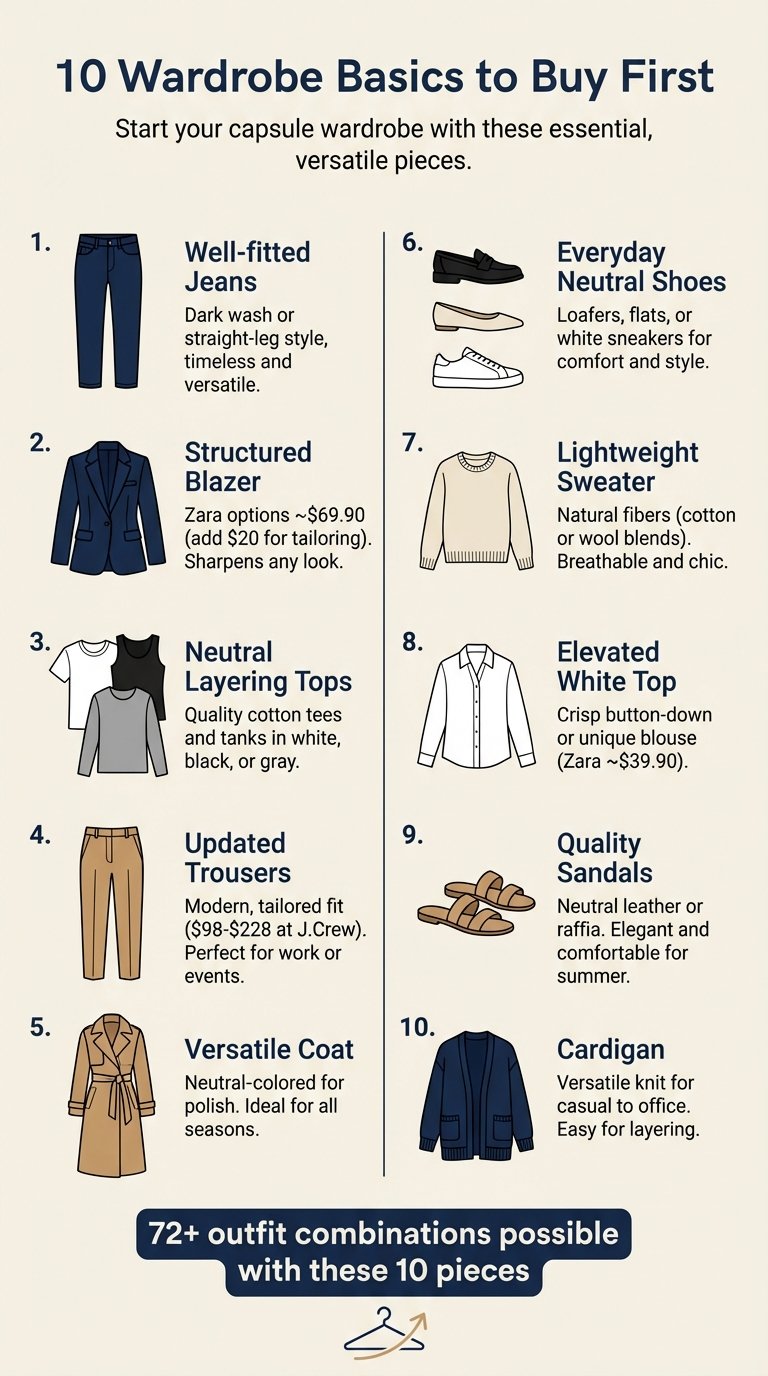
10 Essential Wardrobe Basics for Women Over 40
A capsule wardrobe is all about building a collection of versatile pieces that work together seamlessly – without draining your wallet. Start by editing your current wardrobe to identify what you genuinely need. This helps you avoid overspending on duplicates or items that won’t work with what you already own. The focus should be on core essentials that serve as the backbone of your outfits. As style expert Megan Kristel wisely points out:
"If your core pieces are weak, everything you add around them will feel slightly off. No statement top fixes stretched-out denim."
Before shopping, try the "Three Outfit" Rule: make sure any new piece can pair with at least three items you already own. Sticking to a controlled color palette – think navy, camel, cream, black, olive, and gray – ensures that your wardrobe feels cohesive and offers endless mix-and-match options. Below, we’ll dive into the essential wardrobe pieces that form the foundation of a budget-friendly capsule wardrobe.
10 Wardrobe Basics to Buy First
These ten essentials are the building blocks of a practical and stylish wardrobe:
- Well-fitted Jeans: Go for a dark wash or straight-leg style that holds its shape over time.
- Structured Blazer: A blazer instantly elevates casual outfits. Zara offers affordable options around $69.90, and a $20 tailoring tweak can make it fit like a dream .
- Neutral Layering Tops: Stock up on quality cotton tees and tanks in white, black, or gray. These are perfect for layering or wearing solo.
- Updated Trousers: Modern, tailored trousers work for both professional and semi-casual looks. Mid-range options cost between $98 and $228 at retailers like J.Crew.
- Versatile Coat: A neutral-colored coat adds polish to any outfit and is a must-have for colder months.
- Everyday Neutral Shoes: Loafers, flats, or clean white sneakers are practical options that work with almost any outfit.
- Lightweight Sweater: Choose natural fibers like cotton or wool blends for a layering piece that works in any season.
- Elevated White Top: A crisp white button-down or a unique blouse (like Zara’s $39.90 options) can instantly make an outfit look sharp.
- Quality Sandals: Neutral leather or raffia sandals are perfect for summer and pair well with almost anything.
- Cardigan: A versatile knit cardigan transitions effortlessly between casual and office settings.
With these ten pieces, you can create over 72 outfit combinations simply by mixing and matching strategically.
Buy Less, Choose Better
Once your foundation is in place, it’s time to think smarter about your purchases. The idea isn’t to spend the least amount possible but to spend intentionally. As Megan Kristel explains:
"Style on a budget after 40 does not mean only shopping sales or refusing to spend money. It means spending intentionally."
Focus your budget on high cost-per-wear items – like quality jeans, blazers, and neutral shoes – that you’ll use frequently. For example, a $200 pair of jeans that you wear twice a week for two years ends up costing far less per wear than repeatedly replacing cheaper $60 pairs.
Quality and fit matter more than brand names. A $98 cotton sweater that lasts for years is a smarter buy than a $168 synthetic one that pills after a few washes. Always check the fabric tag and prioritize natural fibers like cotton, wool, and linen, which tend to last longer than synthetics. And don’t underestimate the power of tailoring – a $20 adjustment can turn a $29 clearance blazer into a polished, custom-looking piece.
Avoid the trap of "buying around the problem." If your jeans don’t fit well, no amount of trendy tops will save the outfit. Strengthen your wardrobe’s foundation, and you’ll naturally need fewer items overall. As Kristel puts it:
"If we added up the money tied up in pieces that are rarely worn, never loved, or almost right, it would easily fund a smaller, more useful wardrobe."
When every piece in your closet works together, you’ll find yourself buying less – and what you do buy will work harder for you. This approach not only saves money but also creates a timeless, cohesive style that lasts.
How to Shop Smart and Save Money
Once you’ve established a solid capsule wardrobe, the next step is to shop strategically. This often begins with organizing your closet to see what you truly need. Enhancing your style doesn’t have to mean constant splurging or blowing your budget. Smart shoppers know how to find quality pieces, recognize value, and time their purchases for maximum savings. Here are three approaches to help you find affordable clothing that looks great and stands the test of time.
Shopping at Thrift Stores and Consignment Shops
Thrift stores can be a goldmine for affordable, high-quality clothing. In fact, the average thrift shopper saves around $1,760 per year – or roughly $150 each month. Success in thrifting isn’t just about luck; it’s about knowing what to look for. Christina Harmer, author of Nine to Vogue, puts it best:
"You’re getting a deal because you know more than the tag does."
The key is learning to spot quality. Chelsea Freuck, CEO of MKE Closet Revival, advises focusing on natural fabrics like cotton, linen, silk, cashmere, and leather:
"The majority of high-quality clothing is made with natural fabrics… it’s going to last you a lot longer too."
Timing your visit can also make a difference. Rainy or snowy days often mean fewer shoppers, giving you better access to fitting rooms and fresh donations. Shopping off-season is another smart move – look for coats in summer or sundresses in winter when demand is low. Don’t limit yourself to just one section, either. Vintage sizing can vary, so check sizes outside your usual range, and explore areas like the men’s section or costume jewelry for hidden gems.
If a piece doesn’t fit perfectly, minor tailoring or a full closet cleanse can make all the difference. Once you’ve mastered thrift shopping, the next step is knowing when to shop for the best deals.
When to Shop for the Best Deals
Timing your purchases can significantly lower your clothing expenses. End-of-season sales are a great opportunity to snag discounts on items you can still use, especially if you live in areas with mild weather. For example, buying sweaters in the summer or swimsuits in winter often yields the best prices.
Holiday weekends are another prime time for bargains. Retailers like Nordstrom frequently offer 40–60% off on bras during seasonal sales, and Kohl’s often provides 40% off coupons for workwear essentials like pants and blouses. Events like Amazon Prime Day are ideal for stocking up on basics, such as multi-pack T-shirts for around $25.
Joining store email lists and loyalty programs can also pay off. Many retailers offer 10–20% off for new subscribers, along with early access to sales and exclusive promo codes. When shopping online, filter clearance sections by size and price to save time. As Megan Kristel, Founder of The Well Dressed Life, wisely points out:
"A discount should lower the price of something you already planned to buy. It should not introduce a new category into your wardrobe."
Pairing these timing strategies with the right stores can help you maximize your style while staying on budget.
Best Stores for Affordable Women’s Clothing
Choosing the right retailers is just as important as timing your purchases. Different stores excel in different areas, so knowing where to shop can help you find pieces that fit your style and budget. Here’s a comparison of popular stores for women over 40:
| Store | Price Range | Best For | Style Fit |
|---|---|---|---|
| Zara | $25 – $180 | Blazers, asymmetric tops, pleated skirts | Trendy, elevated basics |
| Target | $12 – $40 | Ribbed tanks, basic tees, casual shorts | Budget-friendly everyday basics |
| J.Crew Factory | $50 – $110 | Classic blazers, work trousers | Preppy, timeless staples |
| Old Navy | $15 – $50 | Casual tees, activewear, seasonal dresses | Relaxed, everyday comfort |
| H&M | $20 – $70 | Trousers, seasonal layers | Modern, budget-conscious trends |
| J.McLaughlin | $98 – $300 | Printed tops, structured dresses | Polished, resort-chic |
When shopping at budget-friendly stores like Target or Old Navy, prioritize natural fabrics like cotton or linen over synthetic blends. These materials tend to last longer and maintain their appearance better over time. For example, a $98 cotton sweater that holds its shape for years offers better value than a $168 synthetic one that pills after a few washes. Always inspect details like seam quality, shoulder alignment, and fabric weight to ensure your purchases will stand up to regular wear.
Outfit Ideas and Styling Tips
If you’ve built a capsule wardrobe, you’re already halfway to creating effortlessly stylish looks. You don’t need a closet packed with high-end brands to look put-together. In fact, studies suggest most people wear only about 20% of their wardrobe regularly. Knowing a few reliable outfit combinations can simplify your mornings and keep your style game strong.
5 Simple Outfit Formulas That Always Work
Here are five outfit ideas that rely on affordable basics you probably already own. A few thoughtful upgrades can take these looks from ordinary to polished.
- The Elevated Casual Summer Look: Combine a white cardigan with denim shorts and raffia sandals. Perfect for running errands or grabbing a casual lunch, this combo is relaxed but refined.
- The "Elevated White Top" Combo: Swap your plain tee for an asymmetrical, puff-sleeve top. Pair it with jeans to instantly elevate a classic denim ensemble.
- The High-Low Professional: Start with a $29 Zara blazer (tailored for $20) over a $15 Hanes ribbed tank, and finish with classic trousers. Tailoring is the secret weapon here, turning budget-friendly pieces into wardrobe staples.
- The Weekend Market Look: Add a patterned top, like one with polka dots, to neutral trousers or a simple skirt. Patterns make a statement without requiring a big spend.
- The Texture Play: Mix faux-leather leggings with a cashmere scarf and a basic cotton tee. Playing with contrasting fabrics adds depth and dimension, no matter your budget.
One key to making these combinations shine is color coordination. Sticking to similar shade families creates harmony and makes even inexpensive pieces look cohesive. Angela Howenstein sums it up perfectly:
"Monochrome neutrals make $30 jeans look Céline-level classy."
Upgrade Outfits with Accessories
Accessories are a game-changer when it comes to maximizing your style. A chunky gold chain can instantly elevate a simple tee and jeans, while a silk scarf tied to a handbag adds a touch of elegance. A wide waist belt can define your shape and give structure to flowy dresses or oversized garments.
When shopping for accessories, focus on timeless pieces that offer a high "cost-per-wear." Think classic leather belts, quality handbags, and well-made watches. On the other hand, save on trend-driven items that may not stand the test of time. Tofi Caroline Adedoyin, Founder of AJOSEPO, puts it beautifully:
"Confidence is the ultimate accessory. Select pieces you love and resonate with your sense of self… Wear them boldly."
For a sophisticated touch, try layering jewelry with different textures and metals. Vintage brooches or monogrammed bags can also add a personal, one-of-a-kind element to your outfits. These small details make all the difference in creating a look that feels polished and uniquely yours.
Maintaining Your Style Over Time
Your personal style isn’t set in stone – it grows and shifts as your life does. But keeping your wardrobe in sync with your evolving style doesn’t mean endless shopping sprees. A mix of regular closet reviews and subtle seasonal tweaks can keep your wardrobe feeling fresh and functional.
How to Review and Organize Your Closet
Start with the Three-Pile Edit: divide your clothes into three categories – "Keep and Love," "Keep but Needs Tailoring," and "Let Go" (which you can donate or resell). If something hasn’t been worn in two years or doesn’t fit anymore, it’s time to part ways.
Once sorted, pick five go-to outfits you consistently wear. Look for patterns in color, fit, and style. This exercise helps you pinpoint your true preferences, so you can avoid costly mistakes when shopping.
Before buying anything new, apply the Three-Item Rule: if a new piece doesn’t pair well with at least three items already in your wardrobe, skip it. This approach keeps your closet cohesive and minimizes those “I have nothing to wear” moments. After streamlining, you can focus on small seasonal updates to keep your style current.
Small Updates to Refresh Your Look Each Season
Once your closet is organized, refreshing your style each season doesn’t have to be expensive. Simple adjustments, like a $20 tailoring job, can breathe new life into an older blazer, making it look tailored just for you. Affordable additions, like a $15 ribbed tank in a trendy color, can also elevate your wardrobe without overextending your budget.
Start by "shopping your closet." Pair items in unexpected ways – like wearing a dress as a skirt by layering a sweater on top. Experiment with textures, such as adding a silk scarf to your everyday denim jacket, to create fresh looks without buying anything new. Small changes like these can make a big impact on your style.
Conclusion
Creating a signature style without overspending is all about making thoughtful choices and investing in versatile, durable pieces that stand the test of time. By incorporating strategies like mixing high and low-cost items and refining your wardrobe smartly, it’s clear that understanding your personal style can save you from unnecessary expenses.
A well-balanced wardrobe blends affordable basics with standout items. Imagine pairing a $15 ribbed tank top with a vintage designer jacket – it can look just as polished as a high-end outfit. And don’t underestimate the power of tailoring – a $20 adjustment can turn a clearance rack blazer into something that feels custom-made and runway-worthy.
"The goal is not to buy the cheapest version of everything. The goal is to build a wardrobe that works hard enough that you do not have to keep replacing it." – Megan Kristel, Founder, The Well Dressed Life
Building a wardrobe isn’t a one-time task – it’s an ongoing process. As you’ve seen, defining your style and curating a capsule wardrobe are just the beginning. Small, intentional updates can keep your look current and aligned with your evolving preferences. Using the P.L.A.N. Formula (Place, Look, Afford, Need) can help you maintain a wardrobe that adapts to your life while staying functional and stylish.
FAQs
How do I find my signature style after 40?
Finding your signature style after 40 begins with streamlining your wardrobe. Prioritize pieces that suit your lifestyle, feel true to who you are, and work seamlessly together. Build a foundation with timeless essentials, then add statement items to keep your look fresh and versatile. Opt for clothing that flatters your shape, boosts your confidence, and showcases your personality. Mixing designer items with budget-friendly finds can help you craft a stylish wardrobe without breaking the bank. Above all, your style should reflect both your uniqueness and your comfort.
What’s the best first item to invest in on a budget?
A well-made blazer or another classic wardrobe staple is an excellent starting point for building a versatile wardrobe. These pieces can be styled in countless ways, giving you a polished appearance without breaking the bank. Stick to timeless designs that effortlessly complement your current wardrobe to get the most out of your investment.
How can I make cheap clothes look expensive?
Angela Howenstein recommends upgrading affordable clothing by combining them with luxury items and paying close attention to quality and styling. For example, pair a designer blazer or a silk blouse with more budget-friendly basics. Opt for well-made fabrics like washable silk or high-quality cotton to enhance the overall look. To achieve a polished and sophisticated high-low style, focus on proper fit, tailoring, and carefully chosen accessories – all without breaking the bank.