

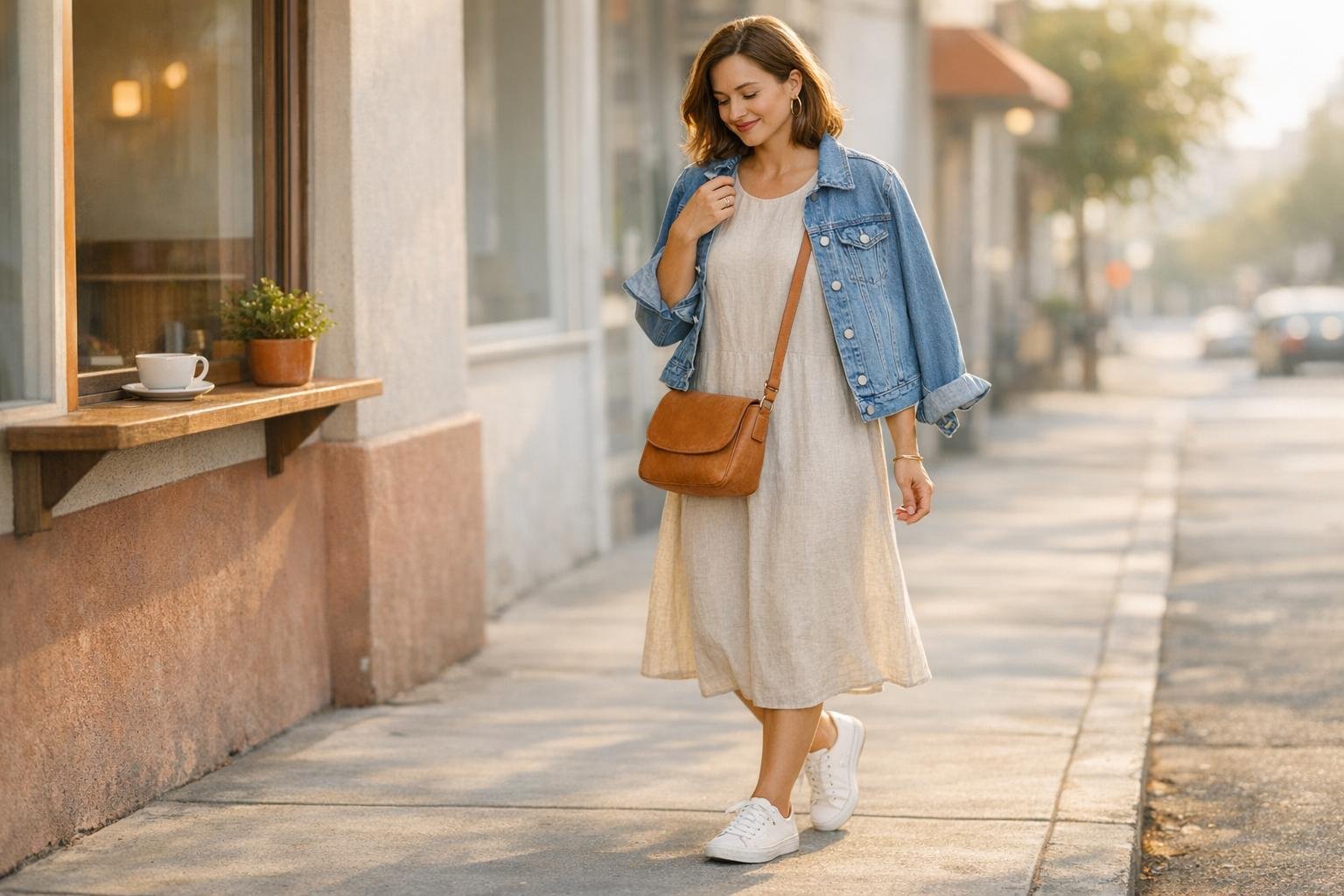
Casual dresses are the simplest way to look stylish without sacrificing comfort. Whether you’re running errands, meeting friends, or working remotely, the right dress can make your day easier. Here’s what you need to know:
- Flattering Fits: Choose shapes that suit your body type – like A-line for versatility or wrap styles for definition.
- Comfortable Fabrics: Opt for cotton, linen, or jersey for breathable, low-maintenance options.
- Layering Tips: Add sweaters, jackets, or scarves to transition dresses between seasons.
- Accessories Matter: Elevate your look with belts, sneakers, or statement jewelry.
- Practical Care: Wash gently, air dry, and store properly to extend your wardrobe’s life.
A well-chosen casual dress paired with simple layers and accessories can go from errands to social outings effortlessly. Ready to simplify your style? Let’s break it down.
Best Casual Dresses for Everyday Comfort & Chic Looks
sbb-itb-9502fca
Selecting Casual Dresses That Fit Your Body and Daily Routine
Dress Styles Guide by Body Type: Find Your Perfect Fit
Picking the right casual dress comes down to two key factors: how well it suits your body shape and how easily it fits into your daily activities. Whether you’re out running errands, grabbing lunch, or working remotely from a coffee shop, your dress should feel as good as it looks.
Finding Flattering Dress Shapes
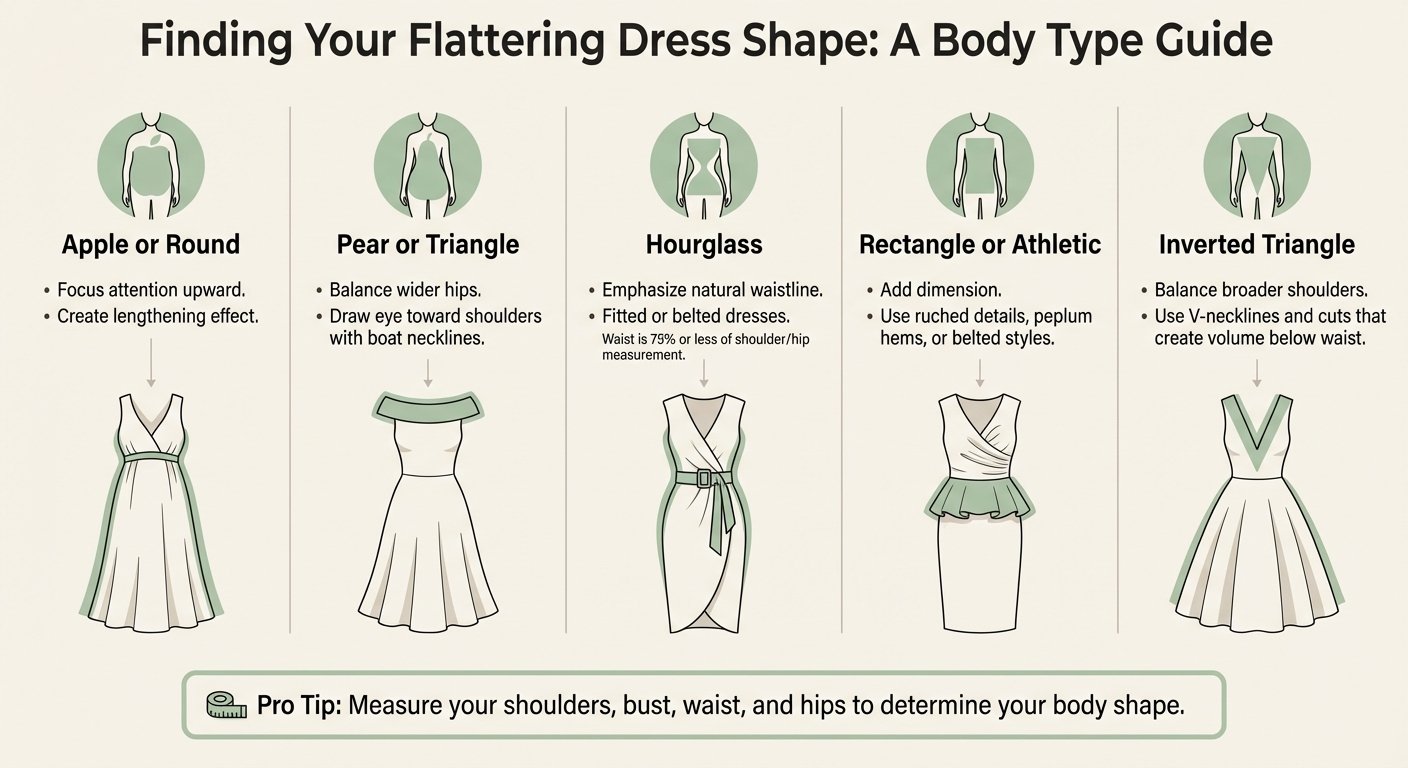
Your body shape is the starting point for finding a dress that highlights your best features. Here’s a quick guide to silhouettes that work well for different body types:
- Apple or round shapes: Opt for styles that focus attention upward and create a lengthening effect.
- Pear or triangle shapes: Look for dresses with boat necklines to balance wider hips by drawing the eye toward the shoulders.
- Hourglass figures: Emphasize your natural waistline with fitted or belted dresses.
- Rectangle or athletic shapes: Add dimension with ruched details, peplum hems, or belted styles.
- Inverted triangle shapes: Choose cuts and V-necklines that create volume below the waist to balance broader shoulders.
"Dressing for your body type is not about correcting your body… It is about understanding proportion so your outfits feel intentional instead of accidental." – Megan Kristel, Founder, The Well Dressed Life
To determine your shape, measure your shoulders, bust, waist, and hips. For example, if your waist is 75% or less of your shoulder or hip measurement, you likely have an hourglass figure.
Once you’ve identified the styles that flatter you, it’s time to pair them with fabrics that suit your lifestyle.
Choosing Comfortable Fabrics
Even the most flattering dress won’t feel right if the fabric doesn’t match your needs. Here’s a breakdown of fabrics that combine comfort and practicality:
- Cotton jersey and modal: These fabrics are stretchy and breathable, making them ideal for busy, active days.
- Linen: Perfect for warm weather with its airy feel, though it does wrinkle easily.
- Pima cotton: A smoother, more durable option than standard cotton, offering a polished look.
- Merino wool: A versatile choice for year-round wear, thanks to its temperature-regulating and odor-resistant properties. It also offers a more refined casual vibe compared to gym wear.
When shopping, you’ll find options to suit every budget. Affordable choices include H&M ($25–$45) and Mango ($50–$100), while premium brands like Reformation ($248–$298) offer higher-end styles. However, fabric quality often matters more than price – a well-fitted $20 cotton dress can look far better than a poorly tailored designer piece.
Layering Techniques for Different Seasons
Layering can turn a casual dress into a versatile piece you can wear all year long. It’s all about how the layers work together, as stylist Autum Love explains: "Layering is not about adding more clothes. It’s about how pieces interact."
Here’s how you can adapt your layering techniques to suit both chilly and warm weather.
Cold Weather Layering
For colder days, the three-tier layering approach works wonders: a snug base layer, a stylish and warm middle layer, and an outer layer for protection. Start with fitted thermal tops, turtlenecks, or bodysuits under your dress to stay warm without adding bulk. For the middle layer, chunky sweaters or oversized cardigans are great options. In fact, wearing a sweater over a midi or maxi dress can give the illusion of a skirt.
Outerwear plays a key role in completing your look. Long tailored coats pair beautifully with midi dresses, while cropped jackets – like moto or denim styles – accentuate the waist when worn with maxi dresses. To keep your silhouette defined, use a skinny belt over your dress and tuck the hem of a chunky sweater into it. This creates a cropped effect that highlights your waist. Add fleece-lined leggings or tights and knee-high boots to shield your legs from the cold while staying stylish.
If you’re shopping for layering pieces, consider these options: puffer vests on Amazon for under $50, bomber and utility jackets from Nordstrom for under $65, or wool coats from Sam Edelman priced under $150.
Warm Weather Layering
When the weather heats up, switch to lighter fabrics and focus on breathable layers. Wardrobe consultant Hallie Abrams advises, "Cropped toppers are the most universal toppers to go over a dress (long or short) as they hit at the waist and maintain the silhouette."
For lightweight coverage, linen or silk button-up shirts (priced around $30–$49) work well. You can wear them open, tie them at the waist, or knot them over your dress for a relaxed look. Other great options include kimonos, sleeveless vests, and lightweight utility jackets, which are perfect for moving between hot outdoor settings and cool air-conditioned spaces. If you’re wearing a blazer or oversized shirt, try rolling the sleeves to mid-forearm for better airflow and a polished, casual vibe. And if the extra layer isn’t needed, simply tie it around your shoulders or waist to keep your hands free.
Adding Accessories to Complete Your Look
After finding the perfect dress and mastering layering techniques, accessories are the final touch that can pull your outfit together. The right additions can take a casual dress and turn it into a polished ensemble. Fashion psychologist Dr. Carolyn Mair explains, "Casual clothing with one intentional upgrade signals that you care without appearing overdressed." The goal is to add personality without overshadowing your dress.
Pairing Dresses with Footwear
Your shoes can make or break your outfit – they set the tone for the entire look. White leather sneakers have been a go-to staple for years, dominating search trends for six consecutive years. As fashion consultant Tim Gunn puts it, "The best casual outfits are never accidental. They follow a formula that balances relaxation with intention."
Flat sandals are perfect for warm weather, while knee-high boots, like the Sam Edelman Larina (priced around $149–$250), pair beautifully with denim minis or shirt dresses for cooler seasons. Block-heeled sandals or kitten heels can elevate a casual midi dress for a lunch outing, while lug-sole booties add a bold, modern vibe to heavier fabrics.
When pairing shoes with your dress, think about proportions. Structured footwear complements voluminous dresses, while chunky soles add edge to delicate, feminine designs. For color coordination, neutral shades like tan, light brown, or white allow brightly colored dresses to take center stage.
Using Jewelry and Belts
Jewelry and belts are subtle yet impactful accessories that can define your silhouette and enhance your outfit without stealing the spotlight. Interestingly, 89% of women in a style quiz admitted they either don’t know how to accessorize or feel they lack the right pieces. A simple approach is the "rule of three" – choose three standout accessories, such as statement earrings, a bracelet, and a chic bag or shoes.
Opt for layered chains, classic hoops, or understated studs that complement rather than compete with your dress. Modern twists on pearls, like pairing them with gold paperclip chains, add a contemporary flair. Belts, on the other hand, are ideal for cinching loose-fitting dresses like tunics or shifts. For example, a slim brown leather belt paired with a vibrant royal blue dress can define your waist while letting the color shine. Earrings should also reflect your hairstyle – bold designs pair well with updos, while simple hoops or studs are great for hair worn down.
These accessories set the stage for the finishing touches – scarves and handbags.
Completing Outfits with Scarves and Handbags
Scarves and handbags provide the final layer of style and functionality. As Cosminha notes, "A scarf carries emotion more than trend. Worn at the neck, in the hair, or tied to a bag, it introduces movement and story." Silk or cotton scarves are ideal for casual dresses, and loose knots or drapes add a relaxed, effortless vibe. A patterned scarf can also bring a pop of color and texture to a solid-colored outfit.
When it comes to handbags, crossbody bags offer practicality and a grounded sense of style. Neutral tones or textured leathers work well with a variety of outfits. For errands, tote bags or canvas shoppers are a practical choice due to their spacious design. However, swapping to a structured leather bag instantly makes a simple dress feel more refined. To tie your look together, try matching your bag and shoes, or stick to a cohesive three-color palette. Stitch Fix stylists suggest, "A rule of three pieces can help your ensemble look polished and complete. For statement earrings, balance your accessories with bracelets. Lean on your bag or shoes for a third focal point."
These thoughtful additions ensure your outfit feels intentional and complete, no matter the occasion.
Dressing for Different Daily Activities
Once you’ve nailed your dress selection, layering, and accessorizing, it’s time to align your outfit with your daily plans.
Outfits for Running Errands
Comfort is key when you’re out and about. Fabrics like jersey, wool, or ribbed knits are perfect for these occasions.
"Dresses can work for running errands, too! Stick to soft fabrications such as jersey or wool, then layer on a casual jacket." – Who What Wear
Picture this: a jersey wrap dress paired with white sneakers and topped with a denim jacket. This combo is not only stylish but also practical for mobility and comfort. A simple layer, like a cardigan or denim jacket, can add a touch of polish to an otherwise basic outfit.
For footwear, if you’re on your feet all day, chunky white trainers or suede clogs with built-in support are great options. Prefer something more feminine? Mary Janes and ballet flats are trending as comfortable alternatives to sneakers. As for bags, a crossbody keeps your hands free, while a roomy leather or suede tote is ideal for carrying groceries or returns.
Dressing for Lunch or Coffee Dates
Transitioning from casual errands to a social outing? A small tweak can make a big difference. The "one-swap" rule is your go-to strategy – replace one casual piece with something more refined.
"Casual clothing with one intentional upgrade signals that you care without appearing overdressed. The contrast itself communicates thoughtfulness." – Dr. Carolyn Mair, Fashion Psychologist
For example, trade your canvas sneakers for leather loafers or kitten-heel mules to instantly elevate your look. Swap a casual tote for a structured leather crossbody or clutch to add sophistication. Want that effortless "model off-duty" vibe? Throw a light denim jacket over a satin slip dress. Or, for a more classic approach, layer a beige trench coat over a striped knit dress.
"Accessories are not about ‘dressing up.’ They’re about finishing the look." – Imogen Lamport, Personal Stylist
To take a simple T-shirt dress into social territory, add modern pearl necklaces or bold statement earrings. These small touches can make a big impact.
Caring for Your Dresses and Shopping Smart
Once your outfits are styled to perfection, the next step is learning how to care for your dresses and shop wisely. Proper care and thoughtful shopping ensure your wardrobe stays versatile and lasts for years to come.
Washing and Storing Casual Fabrics
To keep your dresses in top shape, wash them every 1–3 wears using cold water on a gentle cycle with a mild detergent. This helps maintain the fabric’s quality and prevents unnecessary wear and tear. Overwashing can weaken fibers and cause colors to fade more quickly than through normal use.
"Clothes tend to wear out faster when they’re washed too often."
– Lindsay Zollman, Senior Consumer Analyst at Hisense
Here are a few tips to protect your dresses during washing:
- Turn dresses inside out to safeguard prints and delicate surfaces.
- Fasten zippers and buttons to prevent snagging.
- Sort by color (whites, pastels, darks) and fabric weight.
- Use only the recommended amount of detergent – excess soap leaves residue that dulls fabrics and attracts dirt.
When it comes to drying, air drying is your best bet. It’s one of the gentlest methods to extend your clothes’ lifespan.
"Air drying is one of the gentlest ways to extend the life of your clothes."
– Lindsay Zollman, Senior Consumer Analyst at Hisense
For stretchy or heavy knit dresses, lay them flat to dry. Hanging these items while wet can stretch the shoulders and distort their shape. If you encounter stains, address them immediately by blotting and, if needed, applying a baking soda paste. When storing your dresses, hang wrinkle-prone fabrics like linen or structured cotton, but fold knits and jersey materials to avoid stretching.
Building a Mix-and-Match Dress Collection
A well-thought-out wardrobe starts with a curated collection of versatile pieces. While the average American owns 103 garments, only about 20% of them are worn regularly. With just 15 carefully selected pieces, you can create 50 to 120 unique outfit combinations.
Start with neutral colors like black, navy, camel, beige, and white – these are easy to pair with what you already own. Look for adaptable silhouettes such as wrap dresses, shirt dresses, and midi dresses. These styles can transition seamlessly from errands to casual outings with just a quick accessory change. Opt for natural fibers like pima cotton, linen, and merino wool, which drape beautifully, last longer, and exude a polished feel even in casual designs.
"Fabric texture and drape are processed subconsciously. People perceive higher-quality fabrics as indicators of competence and attention to detail."
– Dr. Karen J. Pine, Professor of Psychology
When shopping, focus on your real lifestyle needs rather than an idealized version. A well-fitted $20 t-shirt dress can make a stronger statement than an ill-fitting $200 designer piece. Fit is key – it conveys intention and confidence. Look for dresses with reinforced seams and secure fastenings to ensure durability. To get the most out of your wardrobe, follow the 3-to-5 ratio: aim to create at least five outfit combinations for every three items you own. Thrifting is another great way to find high-quality designer pieces at a fraction of the price while giving well-made garments a second life.
This intentional approach keeps your wardrobe functional and stylish, perfectly tailored to your daily needs.
Conclusion
Styling casual dresses for everyday comfort doesn’t need to feel like a challenge. It’s all about finding that balance between comfort and intentionality – your outfit should feel thoughtfully chosen, not hastily put together. Start with versatile, breathable pieces that easily mix and match with what you already own.
As discussed earlier, creating a polished yet effortless look comes down to making intentional choices. A dress that fits well will always outshine a pricey one that doesn’t. With a few styling tricks, even the simplest dress can look elevated.
"The best casual outfits are never accidental. They follow a formula that balances relaxation with intention."
– Tim Gunn, Fashion Consultant
Taking care of your wardrobe basics is another easy way to elevate your style. Clean, well-maintained dresses free of wear and tear always appear more put-together. A streamlined collection of quality pieces can offer countless outfit options without the stress of excess.
Finally, don’t hesitate to play around with layers, accessories, and shoes to discover combinations that suit your daily routine. Your style should be a reflection of your real, everyday life – not an unrealistic version of it.
FAQs
What casual dress styles look best on my body shape?
When it comes to casual dress styles, picking the right one can make all the difference. For hourglass figures, dresses that are fitted or tailored – like shirt dresses – can beautifully emphasize your waist. If you have a rectangular or apple-shaped body, consider A-line or empire-waist dresses. These styles can add definition or create a more elongated silhouette.
The key is to choose dresses that fit comfortably, highlight your natural proportions, and, most importantly, make you feel confident and at ease.
How can I wear the same casual dress in multiple seasons?
To wear a casual dress throughout the year, it’s all about layering and choosing the right accessories for the season. In the colder months, pair your dress with tights, boots, and a cozy sweater or cardigan. Opt for darker, richer colors and add outerwear like jackets or scarves to stay warm. During spring and fall, go for lighter layers like a cropped jacket or a shawl. By switching up textures and accessories, you can make your dress work no matter the season.
What’s the easiest way to dress up a casual dress without losing comfort?
The simplest approach is to add small details that make your outfit stand out while keeping things cozy. Layering with a sweater, cardigan, or a well-fitted blazer can instantly give your look a polished edge. Pair that with accessories like bold jewelry, a sleek handbag, or trendy shoes to elevate your style effortlessly. These minor tweaks can help you look stylish and put-together without sacrificing comfort.